Bitcoin’s collapse is forcing crypto veterans to confront the question every bear market eventually asks: when does mass panic create a buying opportunity? The answer, according to many of the investors and analysts who have lived through previous boom-and-bust cycles, is: not yet.
While Bitcoin has fallen below $60,000 — more than 50% beneath last year’s record high — a growing number of market watchers say the cryptocurrency is entering the zone where previous crashes have ultimately bottomed. The catch is that those bottoms have historically taken months to form, with the deepest pessimism often arriving after valuations had already become attractive.
“Bottom will be end of summer,” said Bruno Ver, an early Bitcoin investor and venture capitalist who has backed crypto startups and companies including SpaceX. Ver — who says he first purchased the original cryptocurrency in 2011 — expects Bitcoin to fall as low as $50,000 before establishing a durable floor.
That view reflects a broader outlook among other investors. Rather than trying to identify the exact Bitcoin bottom, many are looking for evidence that forced sellers have been exhausted and long-term capital is beginning to replace speculative money. That process has historically taken months, not weeks.
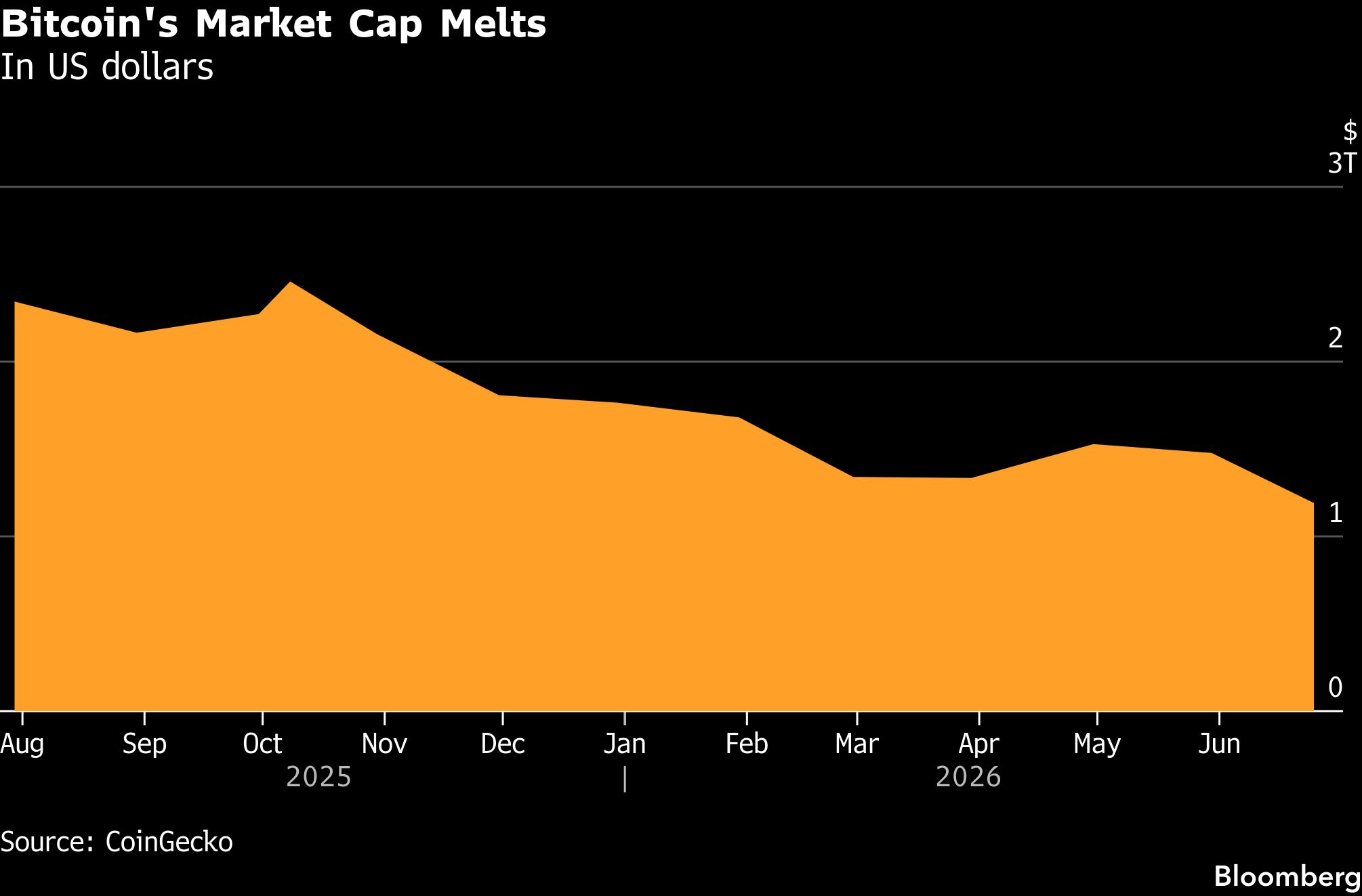
The timing matters because this downturn has become about far more than Bitcoin’s price. Money has flowed out of US spot Bitcoin exchange-traded funds, retail traders have shifted toward artificial-intelligence stocks and concerns surrounding Strategy Inc.‘s financing model have shaken confidence in one of Bitcoin’s largest sources of demand. Bitcoin’s market value has dropped by $1.3 trillion since the coin’s October high. The result is a market searching for a new source of buying just as one of its most reliable pillars comes under pressure.

Against that backdrop, investors are dusting off a playbook that has guided previous crypto winters, turning to data that attempts to identify when forced selling has largely run its course.
One of the most closely watched measures is Bitcoin’s realized price, or the average price investors paid for their Bitcoin. Think of it as the aggregate cost basis of the network. Historically, Bitcoin has found durable bottoms around that level as weak hands capitulate and long-term investors gradually step in.
CryptoQuant estimates Bitcoin’s realized price at about $53,400, roughly 10% below current levels.
“The realized price has acted as an accurate bottom level for Bitcoin in previous bear market cycles, so it’s a metric we closely monitor,” said Julio Moreno, head of research at CryptoQuant. “Our best estimate is that Bitcoin will complete its bottoming formation between today and September, as bottoms take months to play out.”
Glassnode’s research points to a similar conclusion through a broader collection of market indicators. Its MVRV Z-Score, which compares Bitcoin’s total market value with the average price at which the coins last moved, currently stands at 0.26. Readings near or below zero have historically signaled that Bitcoin is entering the final stages of a bear market rather than still trading at inflated valuations.
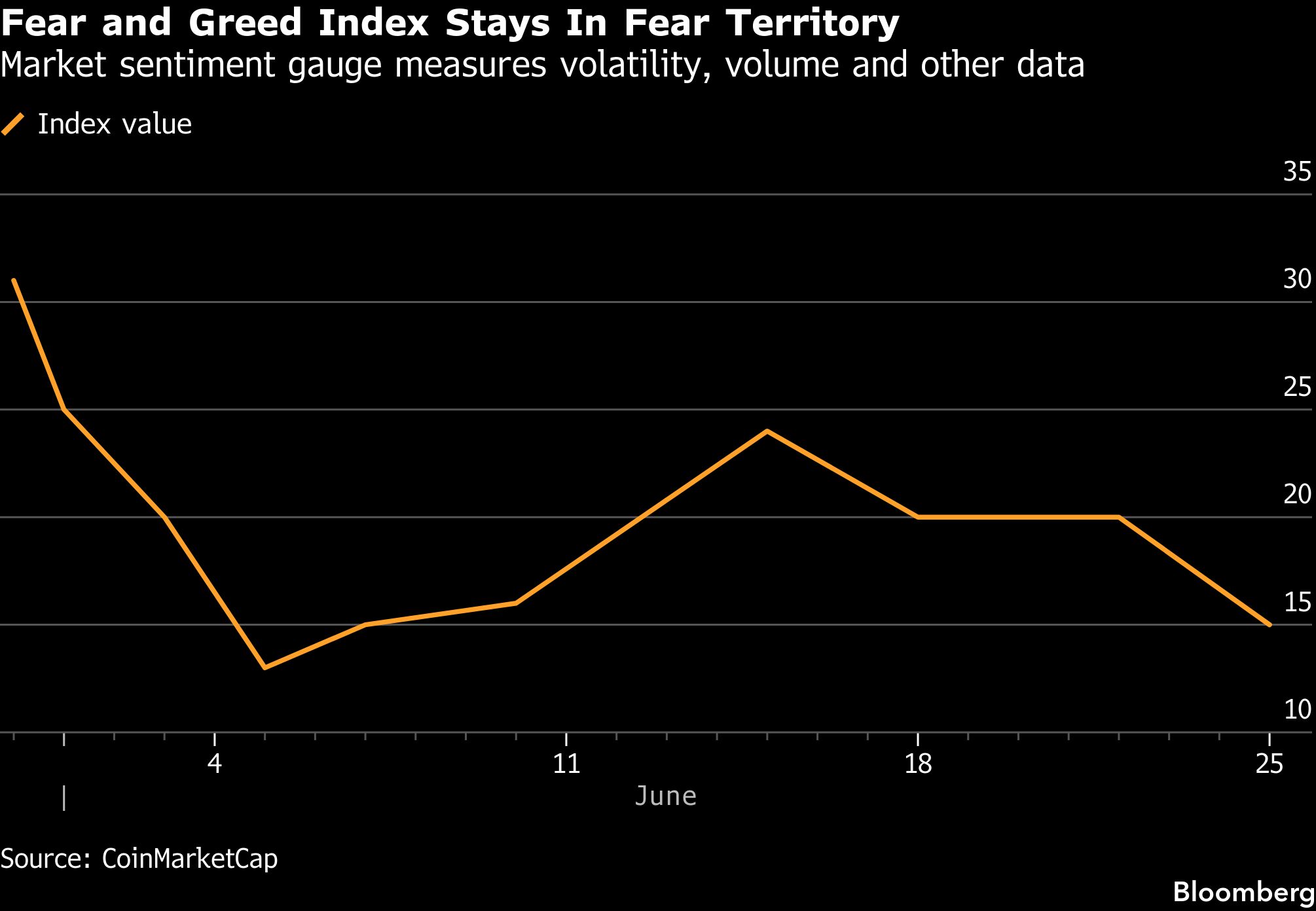
Investor psychology is also beginning to resemble previous market lows. CoinMarketCap’s Fear and Greed Index has fallen to 15, firmly in “extreme fear” territory, and has oscillated around those levels since early June. The index blends measures including price momentum, volatility and derivatives positioning to gauge market sentiment. Ver said prolonged periods of extreme fear have historically coincided with Bitcoin bottoms.
Glassnode’s models suggest Bitcoin remains above the estimated cost of producing a new coin — a threshold that has often marked maximum stress — but the firm’s broader indicators place the current market within a potential bottoming range.
“Looking across our models, they currently suggest a potential bottoming range between $37,000 and $60,000,” said Brett Singer of Glassnode. “The average across the many models suggests around $53,000.”
Still, veteran investors caution against treating any of these signals as a roadmap. Bitcoin remains a young asset whose price is driven as much by momentum, leverage and shifts in investor psychology as by valuation. ETF flows, macroeconomic shocks, regulatory developments or further stress surrounding Strategy can overwhelm even the most reliable historical relationships.
That is why seasoned crypto investors tend to think about bottoms differently. The goal is rarely to buy the exact low. It is to recognize when the balance between fear and value begins to shift. By several historical measures, Bitcoin is entering that zone. Whether that also marks the end of the bear market is a different question entirely.
A message from Advisor Perspectives and VettaFi: Discover something new! Click here to register for our upcoming webcasts.
Bloomberg News provided this article. For more articles like this please visit
bloomberg.com.
Read more articles by Olga Kharif