I am not right as often as I would like. And feeling bad about being right occurs very, very rarely.
But now is one of those times. I was not surprised when the ceasefire between the United States and Iran broke down long before it was due to expire. The memorandum of understanding signed in mid-June left critical issues unresolved; control of the Strait of Hormuz was one of them. The Strait is once again closed, American blockades of Iranian ports are back in place, and the Red Sea has become a new front in the conflict.
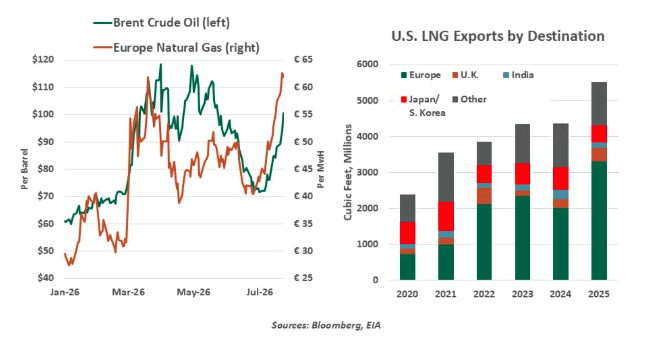
Oil markets have corrected, but crude prices have not yet hit the levels seen in March and April. Most countries have adapted well to the interruption of Middle Eastern exports, drawing down their reserves, purchasing from alternative suppliers, and implementing conservation measures.
See more: Tug Of War
But global oil reserves are at an eight year low, and will eventually need to be replenished. Countries like the Philippines, Indonesia and Pakistan are running particularly lean, and their currencies have come under pressure as they acquire U.S. dollars to purchase oil. The longer that oil supplies are restricted, the broader the community of countries which may experience stress.
The tenuous balance in oil demand and supply will be challenged by blockades in the Red Sea. Iran’s allies in Yemen, which lies at the southern end of that channel, have attacked Saudi tankers there, and threatened broader limitations on traffic. A full blockade would interfere with about 5 million barrels per day of Saudi production. (The Red Sea also accommodates almost 30% of global container traffic, so a closure would produce substantial disruption to supply chains.)
Dislocations in the natural gas markets over the past two weeks have been more consequential. European natural gas prices have jumped, at a time of the year that stockpiles for the winter are being accumulated. Europe divorced itself from Russian gas after the invasion of Ukraine in 2022; Middle Eastern supplies were an important part of the replacement strategy.
The closure of Gulf shipping lanes and damage done to natural gas fields in Qatar have left some European countries scrambling once again. Renewed hostilities in the Middle East have not only hindered transit, but producers are reluctant to resume full production until the threat level has been reduced. Another strike on a natural gas operation would produce an immense conflagration.
Whereas oil trades on the global market, the markets for natural gas are very regional. Gas has to be compressed or liquified to travel stably; specialized terminals and vessels are required. While global shipments of liquified natural gas (LNG) have increased significantly in the last decade, it represents less than 15% of global gas consumption. Price differences for natural gas across countries remain large.
LNG capacity has seen significant investment around the world over the last decade. This has enabled alternative providers, the United States chief among them, to compensate for reduced access to gas from the Gulf. According to Forbes, the United States accounted for 95% of the increase in global LNG shipments last year. S&P estimates that the U.S. will provide 30% of the world’s LNG by the end of this decade. This capacity will help to compensate for restricted Middle Eastern production, but the pivot may take time.
Our latest expectation is that the war will simmer for an extended period but not boil over. If peace somehow breaks out, I will be very happy to have been wrong in this prediction.
A message from Advisor Perspectives and VettaFi: Discover something new! Click here to register for our upcoming webcasts.
Information is not intended to be and should not be construed as an offer, solicitation or recommendation with respect to any transaction and should not be treated as legal advice, investment advice or tax advice. Under no circumstances should you rely upon this information as a substitute for obtaining specific legal or tax advice from your own professional legal or tax advisors. Information is subject to change based on market or other conditions and is not intended to influence your investment decisions.
© 2026 Northern Trust Corporation. Head Office: 50 South La Salle Street, Chicago, Illinois 60603 U.S.A. Incorporated with limited liability in the U.S. Products and services provided by subsidiaries of Northern Trust Corporation may vary in different markets and are offered in accordance with local regulation. For legal and regulatory information about individual market offices, visit northerntrust.com/terms-and-conditions.
© Northern Trust
Read more commentaries by Northern Trust