Are you a “speculator” or an “investor”? This is an essential question that every individual deploying capital into the financial markets must answer. The reason is that how you answer that question determines how you should behave during market cycles.
Historically the United States dollar strengthens when U.S. Treasury yields rise. But the reverse happened in April after the White House announced widespread tariffs.
I don’t believe the current level of tariffs will be maintained. I think most of them will be walked back, and the country will adapt to, say, a 10% tariff here and there. The Chinese (and a few other countries) tariffs are different in that they will have a more significant impact.
Five pivotal U.S. economic considerations, including tariffs, monetary policy, fiscal policy, debt overhang, and demographics, are aligning to depress economic growth for the balance of this year and into 2026.
U.S. policy uncertainty and the ebbs and flows of AI advancement are likely to stoke continued volatility in the world’s stock markets.
In the Middle Ages, a common form of punishment was some form of mutilation, which included cutting off the nose of a prisoner or purposefully marring one’s own appearance before the arrival of conquering armies
Former Federal Reserve Vice Chair Richard Clarida shares three charts highlighting possible macro inflection points in the business cycle: from growth and inflation to debt and labor.
There's a tectonic shift unfolding in global finance—subtle in appearance, but profound in implication. The traditional signposts of market anxiety—stocks, bonds, even crypto—are being bypassed in favor of something far older: gold.
The US is running a substantial net trade deficit with the European Union (EU). Europe has a surplus—but with more exports at risk, it also has the weaker position in a potential trade conflict.
Investors are currently using leveraged ETFs to embrace market volatility, particularly in disruptive technology.
This week's economic data revealed a split in the housing market. New home sales unexpectedly surged while existing home sales declined.
Tax planning for high-income earners isn’t about loopholes; it’s about leveraging the strategies available to you.
A well-planned defensive strategy can position equity portfolios to be resilient in a very harsh market environment.
Asia-Pacific will likely be the hardest hit region from a steep increase in U.S. tariffs.
Downgrades and defaults can detract from corporate bond portfolio performance. Let’s look at how applying fundamental credit research may help reduce these risks.
A raft of reciprocal tariffs between China and the US could bruise China’s export revenues in the short term. But its domestically focused economic engine and shrinking dependency on US trade should minimize fallout in the long run.
Many retirees hold substantial assets in traditional IRAs and taxable brokerage accounts. When planning for retirement income and considering your legacy, Roth IRA conversions can be a strategic way to reduce your tax burden and maximize the wealth you pass on to your heirs.
Risk-assets struggled amidst extremely volatile price action as investors weighed the probabilities of tariffs hitting profits and valuations.
How our open platform of best-of-breed managers allows us to distill complexity in the face of market turbulence by tapping into their collective intelligence.
A tax-advantaged account offers certain tax benefits to encourage individuals to save or invest for specific purposes, such as retirement, education or healthcare. These accounts can help you lower your taxable income, defer taxes or avoid taxes altogether if used for qualified expenses.
A historic sell-off enhances value, with high yields, strong fundamentals, and ample reserves mitigating policy risks.
As major tech firms like Apple and Microsoft report, they face questions about the impact of tariffs. Q1 results may be discounted, with strength seen as pre-tariff demand.
Uncertainty surrounding trade policy is a key driver of our forecast this quarter, which includes an increased probability of a recession.
Even with tariff uncertainty, there’s no stopping the engine of ETF creation. More than 288 new ETFs have already launched this year.
A fundamental lesson in finance is a security’s price should be the present value of all future cash flows.
Recent volatility has pushed yields to historically high levels, potentially creating opportunities in municipal bonds, especially for higher-net-worth investors.
The bond market has been extremely volatile the past couple of weeks since the introduction of global tariffs by the US. Bond yields have sold off almost 50 basis points, and today we'd like to examine why did that occur, what's next, and how should investors think about duration in this environment?
President Trump has been a vocal admirer of China’s Great Wall, built by the country’s emperors to protect their territory from outside aggression. In his first term, he compared his plan to build a border wall with that historic structure.
Coming off a wild ending to a disappointing first quarter, investors must navigate unsettled capital markets and decipher a wave of incoming policy news.
Chief Investment Officer Larry Adam notes with volatility on the rise, maintaining a long-term view is key.
During periods of market volatility and declines, investors get concerned. They question their long-term objectives and whether they have more risk in their portfolios than they can tolerate. These are reasonable thoughts to have at times like these.
While gold has offered some protection during stock market downturns by either rising or declining by less than equities, its current high price levels and historical patterns suggest that future returns may be limited.
The utilities sector could offer up a safe haven sector that traders could also take advantage of during heavy market fluctuations.
Tax filing season may be over for many, but tax planning is an important focus year-round. Consider post-tax season strategies including optimizing deductions or adjusting retirement contributions. Our Bill Cass shares some tax planning ideas to consider.
Kestra Private Wealth Services (Kestra PWS), a registered investment adviser subsidiary of Kestra Financial, Inc., today announced it has welcomed Turas Wealth Partners (Turas), a wealth management firm led by father-son duo John and Shea Marmion, to its platform.
Theoretical forecasts and earnings announcements may provide initial insights as to the impact of current tariff proposals, although estimates may be imprecise.
Despite mounting evidence of disinflation and a weakening economy, Chair Powell’s tone remains too hawkish—and I believe that’s a mistake. The latest inflation readings came in soft, money supply growth continues to undershoot, and even jobless claims are inching higher.
Many investors are wondering what to think of the volatility and uncertainty that has been pulsing through financial markets over the past few weeks.
In financial markets, few technical patterns generate as much attention and anxiety as the death cross.
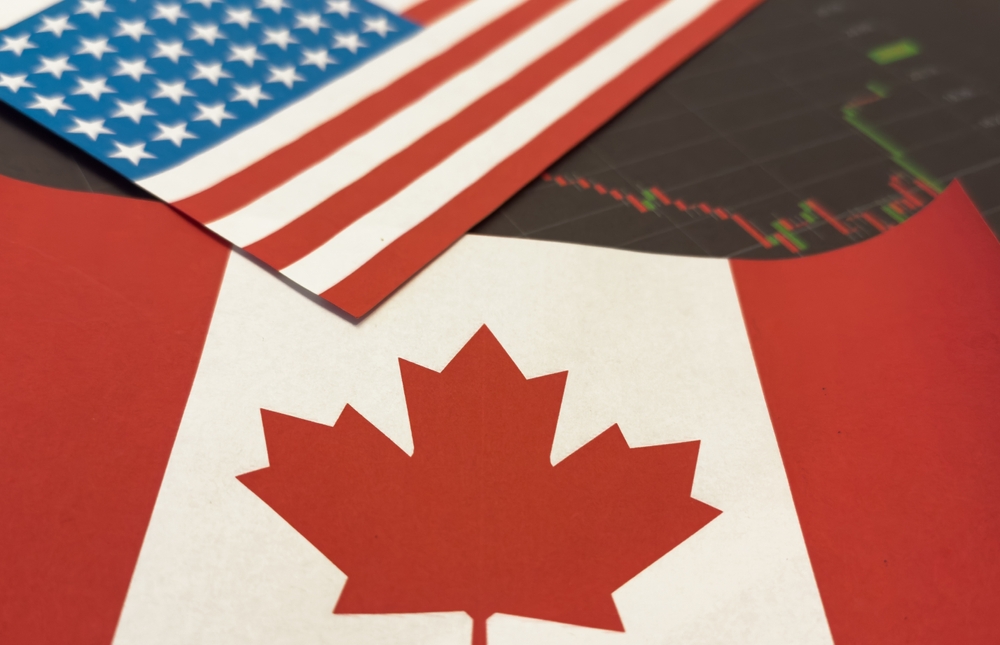
To say that it has been a tumultuous year in Canada would be an understatement. The country’s business model, which relies heavily on commerce with the United States, has been put under severe stress by the American administration.
Stock markets have been rattled by trade war tensions and economic uncertainty driven by US tariff policies. Yet history suggests that equities have usually performed well in the aftermath of peak market volatility.
With many of the big financial reports out of the way, the S&P 500 blended EPS growth rate for Q1 stands at 7.2%. Thus far only 12% of S&P 500 constituents have released results.
It’s been another strong year for ETF demand. ETFs gathered approximately $350 billion of new money year-to-date through April 16.
A reintroduction of SLR relief to balance treasury market stability and systemic risk would likely produce several market effects.
A divide has recently developed between soft and hard economic data. At a time when conditions are changing rapidly, understanding the difference between the two is terribly important.
Emerging-market (EM) stocks might not seem an obvious choice for anxious investors during a trade war. But history suggests that past volatility peaks have created favorable moments to invest in EM stocks.
The hype cycle around artificial intelligence (AI) often moves faster than the capabilities it touts.
Eitelman began by assessing the health of the U.S. economy through hard and soft data. He explained that hard data refers to measures of actual spending and economic activity, while soft data refers to how companies and consumers respond to surveys.
Tariff uncertainty, a weakening US dollar, and surging Treasury yields are flashing warning signs for investors. Explore how political risks, fiscal policy, and global volatility are reshaping capital flows and market confidence.