One of the most referenced valuation measures is Dr. Robert Shiller’s Cyclically Adjusted Price-Earnings Ratio, known as CAPE.
Many ASEAN members punch above their economic weight in international trade. But their power may also make them targets in the mounting global trade battle.
As daily headlines drive volatility, the market has avoided overreacting thus far.
With U.S. tariffs on Mexican and Canadian imports now in effect, yesterday’s risk-off market mood continued today. Both Canadian and U.S. equities modestly sold off.
High fiscal deficits from tax cuts and tariffs raised concerns about inflation. However, markets have since shifted their focus.
We view quarterly earnings season as a critical checkup on how markets are handling current challenges.
We manage risk tactically over the short-term by investing across a broad array of themes and asset classes including cash.
Unlike most of the rest of the world, I will attempt to minimize all there is to say about the beginning of the next 4 years, as the persistent yack and what to make of it reverberates in all corners of the financial globe.
According to Research Affiliates’ Asset Allocation Interactive (AAI) online capital market expectations tool, U.S. large-cap equities are expected to yield 3.4% annually over the next 10 years compared to 9.1% for EM equities and 7% for REITs. This left many webinar participants wondering, How does this extra return square with these assets having similar betas?
A holistic approach may help insurance investors navigate an expansive opportunity set.
In this primer we define small cap growth funds, provide practical suggestions on how to invest in them, and explain why we believe they are a strategically important asset class.
Differing sales tax regimes can appear unfair.
While investors were fixated on inflation data Friday, the most significant surprise came from the advanced trade balance, which posted an unprecedented $37 billion deterioration
February’s market turbulence saw investors pivot toward defensive strategies as policy uncertainty intensified, driving a broad market rotation from mega-cap tech stocks to bonds, gold, and international equities.
We detail some key factors driving the recent market volatility and provide our perspective on how we believe these events may unfold and impact the economy and financial markets.
Heightened economic uncertainty—propelled mainly by trade policy—has unearthed weakness in the equity market, with most pain felt under the market's surface.
We wrote in last month's letter that the U.S. stock market had to meet lofty earnings expectations to maintain its strong performance relative to global benchmarks, while the latter had a lower bar because of considerably cheaper valuation multiples and higher dividend yields.
Russ Koesterich discusses the risk of higher interest rates and the potential impact (both positive and negative) such a move could have on markets.
The AI breakthrough spotlights some of China’s distinctive features that deserve closer attention from investors.
It’s not U.S. tariffs we need to be fixated on to gauge China’s economic growth trajectory but the ability of its leadership to rebuild confidence among entrepreneurs and consumers.
Eggs add to perceptions of high inflation.
Just recently, S&P Global released its 2026 earnings estimates, which, for lack of a better word, have gone parabolic. Such should not be surprising given the ongoing exuberance on Wall Street. Unsurprisingly, rationalizations justify illogic when too much money is chasing too few assets.
Is the US already in recession? Probably not. But in the first quarter, real GDP is very likely to have a minus sign in front of it. Yes, a negative reading for real growth!
We understand that in the business world the word ‘monetization’ of a service a company provides has become one of the most important words as, if successful, this monetization increases the valuation of that company’s stock price.
Today we are going to revisit that matrix updated through 2024. We will see what we got right and wrong, what further inferences we can now make and why I think it confirms my general shift in market strategy over the past few years.
For more than half a century, Warren Buffett has penned annual letters that chronicled economic and market shifts while underscoring Berkshire Hathaway's steady philosophy yet ever-evolving outlooks. With Buffett's 2024 letter freshly published, we take this opportunity to contrast his latest views with the remarkable continuity of his investment philosophy.
Despite GDP figures indicating continued expansion, weakening consumer confidence and persistent inflation concerns speak to uncertainty.
More than a century ago, then-Representative William McKinley pursued an aggressive tariff strategy that sought to protect American industry and reduce reliance on foreign imports. The McKinley Tariff Act of 1890 raised import duties to an average of 50%, one of the highest levels in U.S. history.
Starting in 2025, many non-spouse beneficiaries of inherited retirement accounts must begin taking annual minimum distributions. Our Bill Cass details several strategies and explains why it’s important to seek advice.
With major US policy change unfolding, flexibility across and within asset classes will be critical.
Many independent firms and Registered Investment Advisors aspire to move upmarket, targeting wealthier clients who demand more sophisticated financial solutions.
Portfolio Manager Andrew Mattock, CFA, explains the importance of assessing U.S. tariffs as a component among external variables that can influence, rather than drive, investment returns.
U.S. equity investors face an interesting allocation question in 2025: Why buy anything other than the S&P 500?
Looming U.S. and global policy shifts may potentially rattle markets, but a tactical and flexible approach could help investors navigate risks and opportunities regardless of how events play out.
The decision to drill for oil is not primarily driven by government mandates or regulatory pressure, but rather by market forces.
Trade war fears and disappointing data have sparked a flood of defensive buying activity in consumer staples, utilities, and healthcare stocks.
The perfect pairing for your U.S. large-cap portfolio?
We delve into the unprecedented level of equity risk investors are taking, the record-high uncertainty measures facing further impacts from deglobalization, and the benefits of maintaining a diversified portfolio through it all.
Should you avoid lower-rated, riskier investments like high-yield corporate bonds or bank loans? Not necessarily, but you should understand the risks.
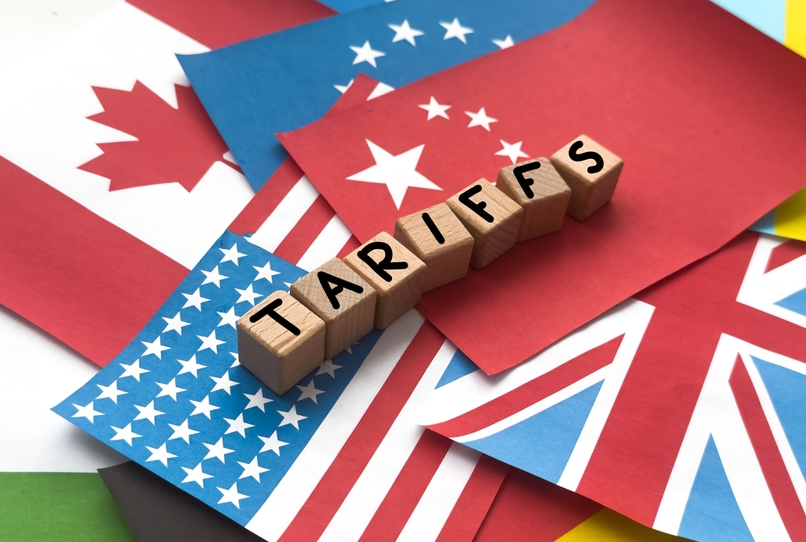
An aggressive U.S. tariff regime will come down hard on major economies.
The long-anticipated “infrastructure week” has finally arrived. This is a cornerstone of the administration’s agenda.
The fourth quarter 2024 earnings season more-or-less wraps up this week with the final trickle of retailers coming in, as well as the highly anticipated report from Nvidia which was out yesterday afternoon.
Measuring the effectiveness of ESG-labeled bonds can be a challenge, particularly with “outcome bonds,” which have specific environmental or social goals but lack standardized assessment criteria.
In the report, John Kerschner, Head of US Securitized Products & Portfolio Manager, and John Lloyd, Lead for the Multi-Sector Credit Strategies & Portfolio Manager, review the best-performing U.S. fixed income sectors of 2024 – what worked, what didn’t, and what it means for investors going forward.
If Trump tariffs Chinese, European, or Canadian products, those countries tend to enact counter-balancing tariffs on U.S. products. Such slows demand for goods and services between all parties, again a deflationary process.
The economy can grow through policy changes.
We recently sat down with Justin Owens, our senior director and co-head of strategic asset allocation, to discuss the next phase of liability-driven investing (LDI) and the key trends driving this evolution. Below is a recap of our conversation.
The overall size of the municipal bond market is over $4 trillion. While this a very large market, an investor’s personal situation combined with the nuances of the municipal bond market can sometimes make it feel much smaller.
Senator Cynthia Lummis (R-WY) takes a pivotal role in shaping how America approaches cryptocurrency and blockchain technology.
Nvidia, the biggest AI chip firm, reports Wednesday with investors watching sales of Nvidia's newest chips and worried about cheaper competition from systems like DeepSeek.