Head of EMEA and Asia Pacific Equities Lucas Klein and Head of Americas Equities Marc Pinto argue that progress on the trade impasse, further monetary easing, pro-growth reforms, and an innovation revolution should all prove supportive to equities over the mid term once the market moves past near-term volatility.
With tariff news providing constant equity market fluctuations, the case for bonds becomes more compelling. The added uncertainty also punctuates the need for an active management strategy, which one particular Vanguard ETF offers.
Financial markets have been experiencing some of their wildest trading days in history this year. Stock and bond prices have been moving in unison—an alarming scenario for investors and their advisors. With increased volatility, long-term investors might benefit from additional exposure to alternative strategies within their portfolio allocations.
If I told someone with even a little investing experience that I own an asset that pays like stocks but is stable like bonds, they would probably think I was a huckster or a fool. Yet many of the most sophisticated investors claim to own such a thing.
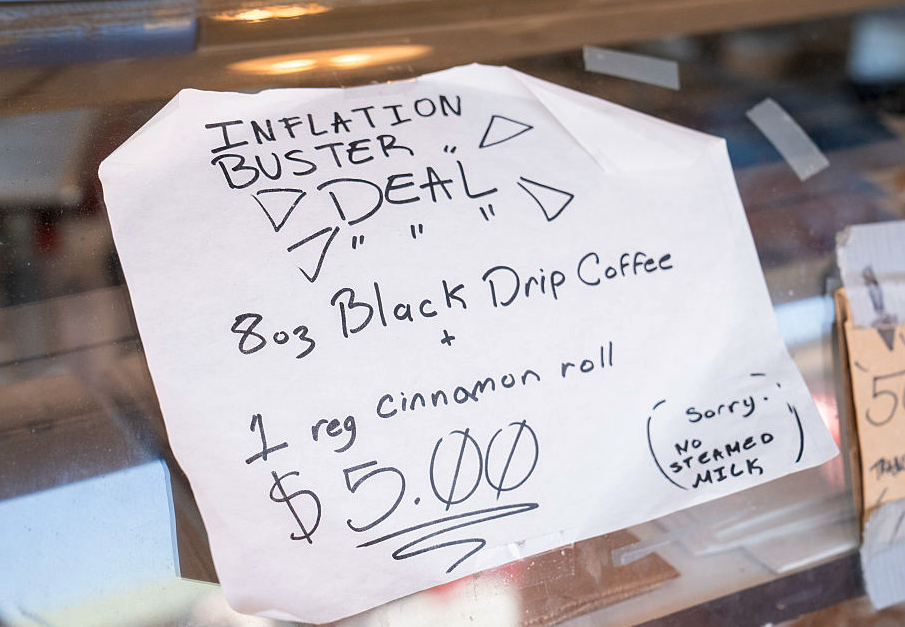
When it comes to inflation, America has reached a “Mission Accomplished” moment. Rule No. 1 of inflation reports is never to read too much into one report, but there have now been several months of fairly low inflation, so it seems safe to call it: The Fed did its job. Pandemic inflation is over.
Despite inflation worries, fiscal deficit concerns, and continued geopolitical conflict, equity markets posted strong returns in May on the back of easing tariff tensions, lower probability of recession, and better than expected US Q1 earnings.
After weeks of hand-wringing around demand for long-term US debt, all eyes are on Thursday’s 30-year Treasury auction for a fresh read on whether spiraling deficits are causing investors to shun the maturity.
The US and China capped two days of high-stakes trade talks with a plan to revive the flow of sensitive goods — a framework now awaiting the blessing of Donald Trump and Xi Jinping.
The first half of 2025 has been driven by headlines that have caused volatility in both the stock and bond markets. While tariff negotiations have commanded the most attention, we are now pivoting to the federal budget deficit, which feels like a perpetual headline over the last 15 years.
Today, Vanguard released its newest bond fund, the Vanguard Multi-Sector Income Bond ETF (VGMS).
Integrating volatile and illiquid assets into the ETF structure is something to be avoided, Doubleline CEO and CIO Gundlach said.
With the world order in flux, investors can look to fortify portfolios by diversifying across global markets and capitalizing on attractive, high quality yields.
This video examines the ratio of unemployment claims to the civilian labor force and its effectiveness as a recession indicator.
Financial institutions shouldn’t underestimate the depth of regulatory complexity coming their way. A misstep in just one area — whether it’s KYC, AML or elsewhere — could unleash severe consequences.
US Treasuries surged as easing US consumer inflation prompted traders to increase their wagers on more than one Federal Reserve interest-rate cut this year.
Back in 2016, Intercontinental Exchange Inc., the owner of the New York Stock Exchange, revealed that it was considering an offer for the London Stock Exchange Group Plc.
Wall Street analyst outlooks are typically bullish. If you aggregate every price target on every S&P 500 Index company and weight them to match the index, it’s exceedingly rare for the overall number to fall.
The right custodian will be more of a partner than a vendor. Here are some things to consider when making your selection.
While the immediate path for tariffs may drift lower, the U.S. legislative branch is hammering out a tax and spending bill that seems to favor tax cuts over lower spending, reviving worries over the U.S. budget deficit and a growing debt burden that cannot be ignored.
Advisors looking to add or enhance existing gold exposures in their portfolio have a range of strategies to consider within the ETF vehicle.
The global economy is continually evolving due to inflation, interest rates, and geopolitics. How could these and other factors influence the major asset classes over the coming decade?
If we lived in a world where mobile signals were visible, the sky would shimmer like a storm—layers of frequencies rolling over rooftops, crossing oceans and saturating valleys.
Robotics was one of the earliest examples of a disruptive technology. It enjoyed some time in the investment community limelight. But it was rapidly usurped by other innovative technologies, including AI.
The US housing market remains in a state of inertia. Despite the arrival of the spring selling season, both new and existing home sales continue to underwhelm.
In recent years, “buying the dip“ and more vulgar variations have often been equated to “dumb money” or retail investors, who are presumed to always make a mistake. However, as investors, we need to rethink how we view “buying the dip” because the whole goal of investing is to “buy low and sell high.”
Advisors can help clients and their families plan for the rising costs of tuition and other educational expenses by knowing the benefits of 529 plans — and staying up-to-date on evolving rules around these investment vehicles.
Small-cap stocks tend to offer greater growth potential than their large-cap peers, but those returns have yet to materialize consistently. What will it take to turn the tide?
Stablecoins are a special flavor of cryptocurrency. Unlike Bitcoin or countless wildly traded memecoins, whose values rise and fall based on market moods, the most popular versions of these digital tokens are supposed to always be worth $1 each.
Blackstone Inc. is planning to invest as much as $500 billion in Europe over the next 10 years, underlining the continent’s growing appeal to investors during a period of geopolitical flux.
My unifying theory of finance is that everything goes seriously wrong when people start seeing something — a bond, a mortgage-backed security, a crypto exchange — as risk-free when it isn’t.
The Fear Trade is what most Western investors are familiar with. It’s the flight to safety during times of uncertainty, driven by concerns over inflation, interest rates, geopolitical risk and more.
Here’s the blunt truth: Many great investment strategies fail because of poor implementation. Robust capabilities in trading, transition management, overlays and currencies are critical to executing a strategy.
Investors looking to move big blocks of corporate bonds have long relied on exchange-traded funds listed on stock exchanges to jump in and out of positions. But now, they’re increasingly trading directly in the debt market.
The push to put private assets in the hands of individual investors is breathing new life into a relatively quiet corner of the asset management industry: interval funds.
For the first time in five months, gold-backed ETFs globally reported modest outflows in May as investors took profits.
Markets may be fretting over Federal Reserve policy and economic soft landings, but a handful of momentum ETFs have quietly been stealing the show. Across the array of factor funds, momentum has performed best this year.
After falling 0.7% in April, the S&P 500 gained 6.3% last month, marking the index’s best May return since 1990 and its best monthly return since November 2023 (see the chart).
Carolyn McPhillips, President of MFDF, sheds light on the evolving role of ETF directors and their growing importance as investment products become more complex – particularly in emerging areas like crypto and private assets. VettaFi’s Zeno Mercer explores artificial intelligence ETFs, highlighting new launches and offering tips to help investors navigate this rapidly expanding category.
VettaFi’s Head of Research Todd Rosenbluth discussed the Fidelity Enhanced International ETF (FENI) on this week’s “ETF of the Week” podcast with Chuck Jaffe of “Money Life.”
Investors nearing or in retirement who are currently defaulted into TDFs need to stop defaulting and move to safety now.
Stablecoins and the concept of digital money represent a significant shift from the current system. While there are many risks with digital money, there is also promise.
Vanguard Group Inc. is launching a low-cost fund focused on emerging-market stocks while explicitly avoiding China, muscling into a trade long dominated by BlackRock Inc.
Yale University’s $41 billion endowment, led for decades by the late investing giant David Swensen, has been the envy – and the blueprint — for many US universities eager to secure their financial future.
Retail traders using sophisticated quantitative strategies are starting to have a surprising and noticeable impact on financial prices.
Three months after the Chinese artificial intelligence developer DeepSeek upended the tech world with a model that rivaled America’s best, a 28-year-old AI executive named Alexandr Wang came to Capitol Hill to tell policymakers what they needed to do to maintain US dominance.
Increasing investor preference for actively managed strategies continues in this year’s tumultuous environment. With active ETFs taking increasing market share, advisors and investors have ever-expanding choices when looking to augment existing passive exposures.
Today we’ll continue our SIC highlight series featuring a relatively new face who is now indispensable, plus some new ones who were crowd favorites.
It would seem evident that most investors would understand that consumer spending drives economic growth, ultimately creating corporate earnings growth. Yet, despite this somewhat tautological statement, Wall Street appears to ignore this simple reality when forecasting forward earnings.
Rebounding demand from ETF investors and resilient buying from central banks and Asia retail have propelled gold prices to fresh records north of US$3,000/oz. Find out why we believe there is more room to run.
Last week, the labor market took center stage, presenting a nuanced picture of continued resilience alongside subtle signs of softening.