Over the past few months, I’ve had occasion to speak at a number of conferences concerned with the impact of artificial intelligence on financial jobs.
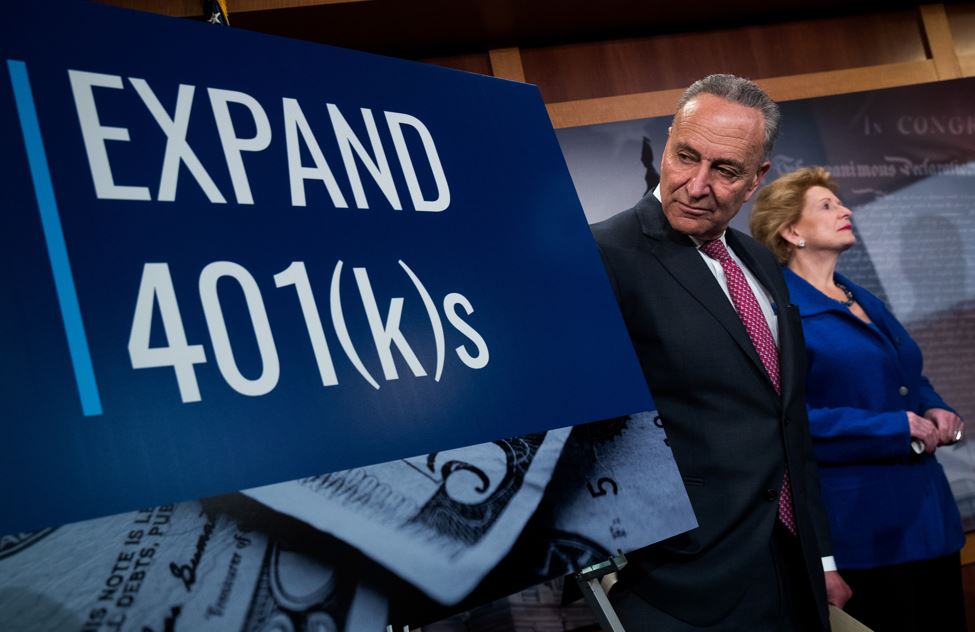
Private equity wants access to Americans’ retirement accounts, and is lobbying President-elect Donald Trump’s administration to get it.
The Roaring 2020s have been very good so far, but not exceptional when examined in isolation. That said, when viewed in the context of the past 16 years, this record-breaking bull market is spectacular.
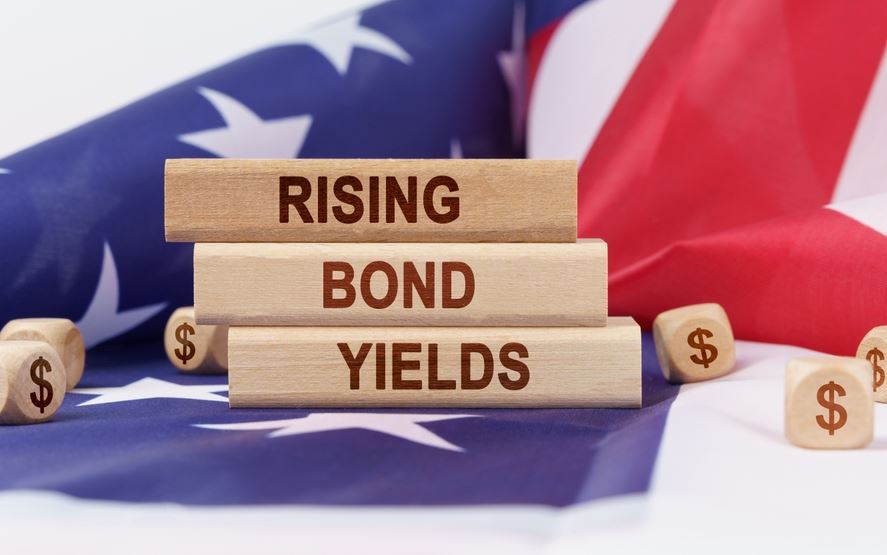
The question asked of me most often recently: "Why are bond yields rising?" After verbally answering it plenty of times, it's time to put my answer in writing for everyone else to see.
Be wary of claims that indexing and passive investing have huge hidden costs. In my view, passive investing involves owning, as close as is economically feasible, every stock weighted to market capitalization. So this means total stock index funds.
The recent surge in bond yields is directing renewed attention to America’s grim fiscal outlook.
For decades, one of Saudi Arabia’s most strategic overseas outposts was a little-known office in New York City that coordinated its oil sales to American clients.
Goldman Sachs Group Inc. has upgraded its dollar forecasts, citing a robust US economy and likely higher tariffs that may slow monetary easing.
Treasuries extended their drop after Friday’s blowout employment report strengthened speculation that the Federal Reserve is poised to pause its interest-rate cuts for virtually all of this year.
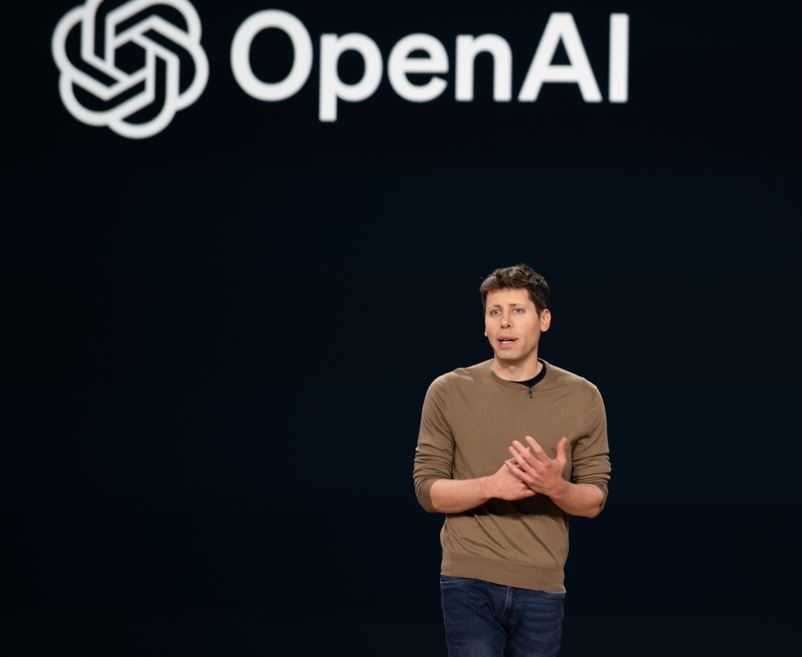
OpenAI’s top executives are planning to host events in Washington DC and two key swing states to bolster support for investment in artificial intelligence as the company adapts to the biggest change in the US political landscape since ChatGPT launched.
Taiwan Semiconductor Manufacturing Co.’s quarterly sales topped estimates, reinforcing investor hopes that the torrid pace of AI hardware spending will extend into 2025.
Chinese investors’ fierce appetite for overseas shares has triggered rare, full-day suspensions on a pair of exchange-traded funds tracking global equities.
Energy is the star sector of the S&P 500 Index in the early days of 2025, shaking off two consecutive years when it was a market laggard, and gaining despite Wall Street’s dim outlook for oil and gas stocks.
When Mark Zuckerberg earnestly looked at a camera and told the world (or President-elect Donald Trump) that he was shutting down all fact-checking on Facebook and Instagram, he left out some important context.
US Treasuries plunged as evidence of a resilient labor market pushed traders to shift their expectations for the Federal Reserve’s next interest-rate cut to the second half of the year.
Indonesia isn’t taking a step back from its hardball approach to Apple Inc. The showdown has turned into quite a spectacle, but it’s unlikely the wins will be sustainable.
Invesco Ltd.’s ETF lineup absorbed a record amount of cash in 2024 from at least two classes of investors: those chasing AI-driven gains, and those shying away from big tech’s sway.
After cementing its position as the dominant player in the US for a niche but highly lucrative investment vehicle, Janus Henderson is looking to try its luck in Europe.
Stock investors have been watching the runup in US Treasury yields with considerable alarm of late.
A contestant could be forgiven for guessing Boeing Co., but the correct answer would be General Electric Co., and the talented executive is Larry Culp.
A messy, ongoing tech breakup between the US and China is forcing a rethink about what the industry might look like for consumers in a decoupled world.
Most people assume that the S&P 500 Index will go up over long holding periods.
US investment banks have little room for error in their upcoming full-year results.
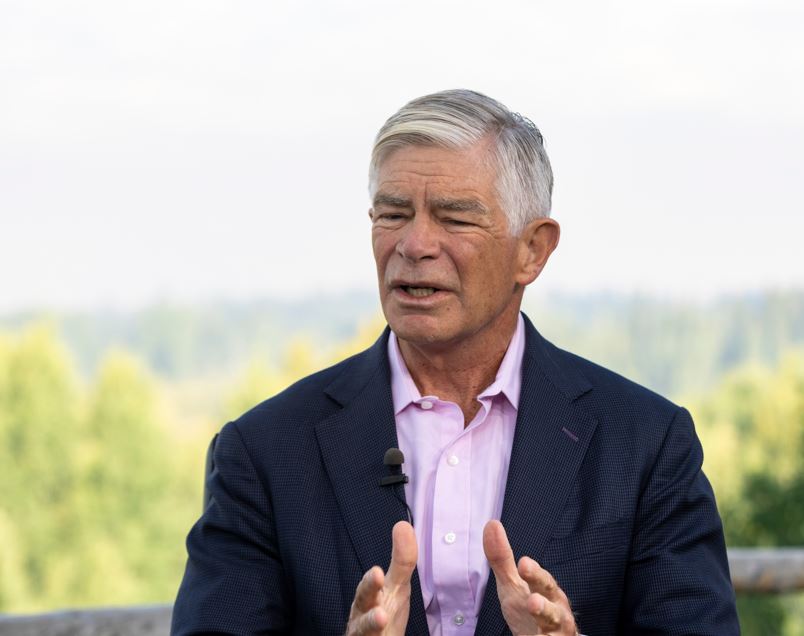
Federal Reserve Bank of Philadelphia President Patrick Harker said officials are on track to lower interest rates this year, but the exact timing will depend on what happens with the economy.
The selloffs that keep flaring in the world’s bond markets are pushing yields toward key thresholds amid escalating worries about elevated inflation, tempestuous politics and swelling government debts.
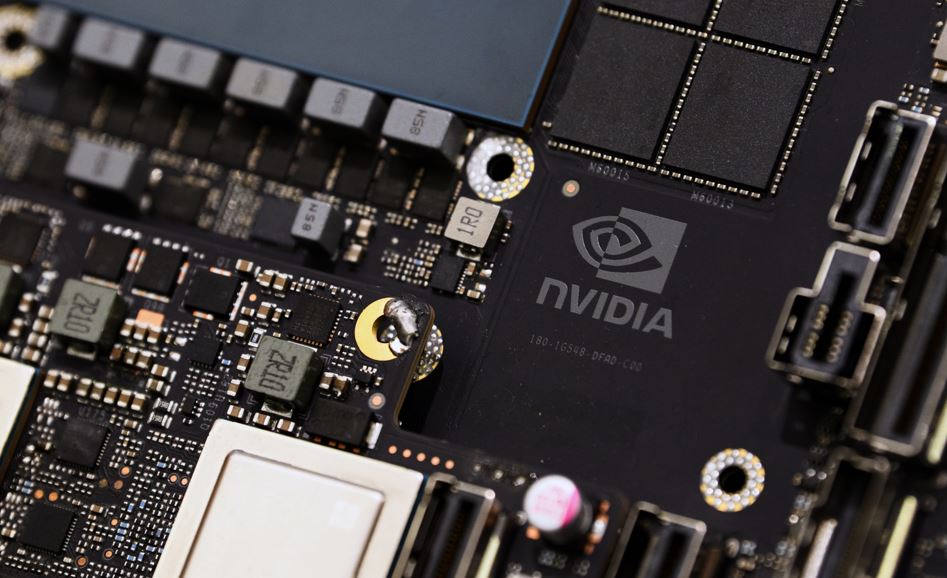
President Joe Biden’s administration plans one additional round of restrictions on the export of artificial intelligence chips from the likes of Nvidia Corp. just days before leaving office, a final push in his effort to keep advanced technologies out of the hands of China and Russia.
When you aren’t the one in charge, you will always be vulnerable to whatever decisions the leaders might make.
US mortgage rates edged up to just shy of 7% at the turn of year and a gauge of home-purchase applications tumbled to the lowest level since February, adding to evidence of a struggling housing market.
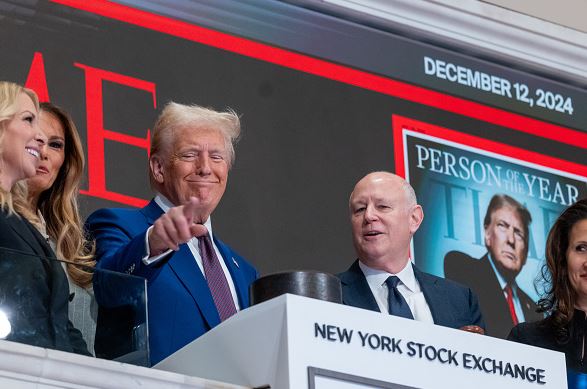
A cohort of about 20 Republican House members from New York, New Jersey and California was invited to meet with President-elect Donald Trump at his Mar-a-Lago estate Saturday ahead of a looming fight over an extension of his 2017 tax cuts.
The 20-year Treasury bond offered a grim warning as a selloff fueled by inflationary angst gripped global debt markets: 5% yields are already here.
The AI boom of the past two years has largely been a two-horse race. Alphabet Inc.’s Google and Microsoft Corp.-funded OpenAI have duked it out for customers, while Amazon.com Inc. and Meta Platforms Inc. have nibbled at the margins for market share.
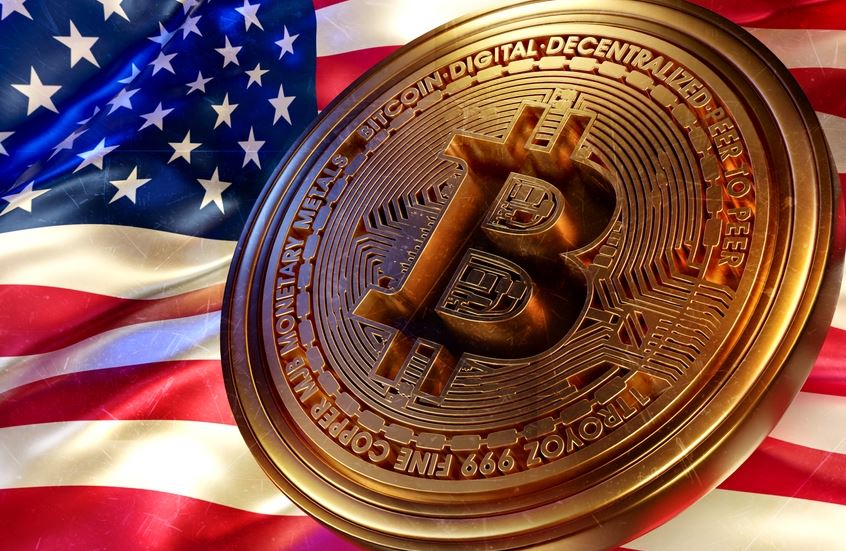
A few weeks ago, a reader emailed to challenge what he described as our “cautionary, skeptical and net negative” stance on Bitcoin.
In the rush to secure a new client, many advisors instinctively push for momentum during the sales conversation, often feeling the pressure to keep things moving forward.
Thanks to technology and the rise of passive investing, putting together a sophisticated, diversified portfolio has never been easier.
Every central banker has a make-or-break moment. As the euro crisis raged in 2012, then-European Central Bank boss Mario Draghi took to describing the common currency as a “bumblebee”:
President-elect Donald Trump is said to be interested in the privatization of the US Postal Service, a prospect that also appeals to his DOGE project and its allies in Congress.
Federal Reserve Governor Lisa Cook said policymakers can proceed more cautiously with additional rate cuts, citing a sturdy labor market and recent bumpiness in inflation data.
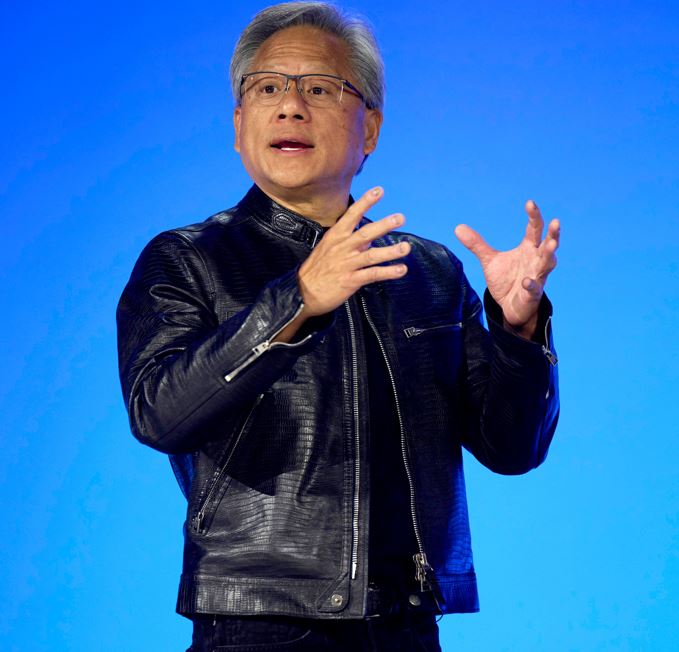
Nvidia Corp. investors have high hopes that Monday’s speech from CEO Jensen Huang will spark a fresh breakout in the chipmaker’s shares, which have plateaued since November after roaring higher for much of 2024.
The most telling moment in the Biden Administration’s decision to block Nippon Steel Corp.’s attempted takeover of United States Steel Corp. was unintentional.
Money managers are seeing plenty of reasons to remain bullish on gold, following a stellar 2024 that saw the precious metal post its biggest annual gain since 2010.
President Joe Biden is indefinitely blocking offshore oil and gas development in more than 625 million acres of US coastal waters, warning that drilling there is simply “not worth the risks” and “unnecessary” to meet the nation’s energy needs.
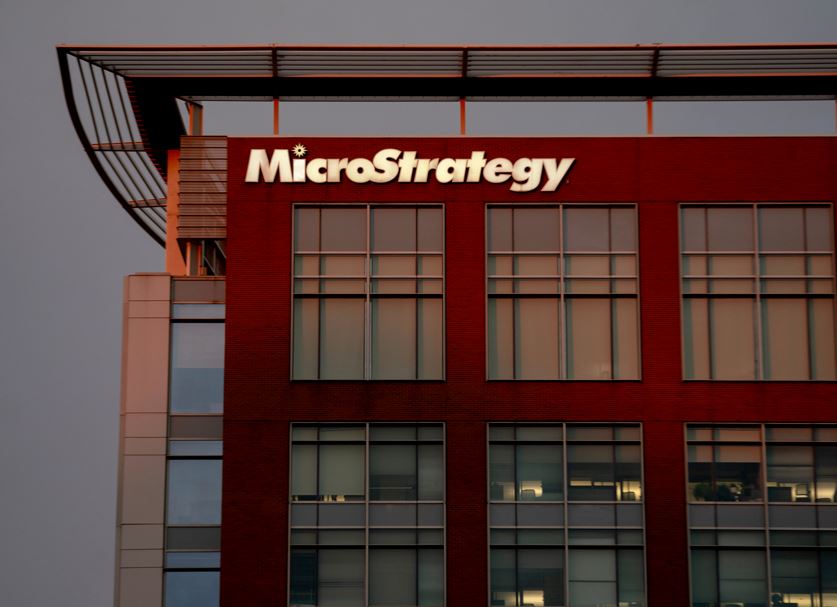
MicroStrategy Inc. bought $101 million of Bitcoin after announcing that it would use perpetual preferred stock as well as common shares and debt to acquire more of the cryptocurrency.
What happens in the US economy doesn’t always stay there, particularly when it comes to the UK.
Federal Reserve Chair Jerome Powell has indicated that the central bank’s communication will be part of its 2025 monetary policy review.
With 2024 behind us, let's revisit the top 10 most-read charts of the year.
The incoming Trump administration has set a goal of growing the economy by 3% per year, similar to promises made during Donald Trump’s first term in office.
Caryl Falvey shares retirement-conversation insights from MIT Agelabs and MassMutual Strategic Distributors.
Although the general public might not pay much attention to such price swings, they still leave a serious impact on global trade and investment.
Wall Street is forecasting an 8% return in 2025. That’s below the 10.4% average nominal return over the past 99 years, but it is a forecast of even higher highs. Do you believe it? Will “The Bull” keep running this new year, or is it getting tired?
Quant funds that make money surfing the momentum of markets saw a promising year slip away in 2024 when big bouts of volatility lashed everything from Japanese stocks to cocoa futures and Treasuries.