As the effects of US import tariffs begin to emerge, we shift our stance on equities to underweight.
In the report, Portfolio Managers Andy Acker and Dan Lyons say that despite growing policy uncertainty, plenty of healthcare companies have managed to put up big returns.
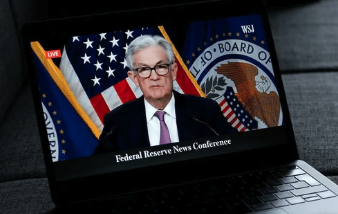
In a rare moment of honesty, Federal Reserve Chairman Jerome Powell admitted he and his fellow central bankers don’t know what they’re doing as they wrapped up the May Federal Open Market Committee (FOMC) meeting.
Bonds and stocks falling together stirs painful memories of the 2022 inflation surge. This time, trade and tariff uncertainty is to blame, along with a dose of questioning the Fed’s independence.
Last week featured a light economic calendar, with the Fed holding its benchmark interest rate steady for the third consecutive meeting.
At Wednesday’s press conference, Chair Jay Powell signaled a wait-and-see approach, as the Fed keeps a close eye on inflation pressures and the job market.
China drove the surge in retail investment demand, charting the second strongest quarter on record.
Preparing for retirement involves more than finances and should include a focus on health, wellbeing and goals. Our Mike Dullaghan explains why it’s important to start preparing 10 years ahead of retirement.
Fed officials remain patient, likely awaiting hard evidence of a weaker U.S. labor market before considering rate cuts.
The federal government recently resumed student loan collections after a multi-year pause. This affects millions of borrowers who have been in forbearance since March 2020. Our Bill Cass outlines some options for borrowers in default.
Central banks continued to stockpile gold in the first quarter.
The Fed held the federal funds rate steady but noted that the risks of slowing economic growth and higher inflation have risen.
As investors wait for updates on trade deals during the pause in tariff implementation, the focus for many has turned to economic growth and the conflicting data surrounding it.
The Federal Reserve held rates steady today, while emphasizing that elevated uncertainty has clouded the path forward. If, when, and how much tariff policy will change in the months to come will play a large part in dictating the next move for the Fed.
Elite golf is a mental game as much as physical—and so is investing. This year’s Masters tournament was one of the most compelling I have ever witnessed, and Rory McIlroy’s long-awaited playoff victory contains a number of life lessons that are relevant for investors.
I hate to be the one to break it to you, but the economy and the markets are not working efficiently. It’s been that way for at least all of my adult life (2008), and maybe a handful of years before that.
Once again, the Federal Open Market Committee (FOMC) decided to keep rates unchanged at today’s meeting, leaving the Fed Funds trading range at 4.25%-4.50%, keeping the level for overnight money 100 basis points (bps) below last year’s peak reading.
S&P 500® earnings per share estimates have come down sharply. According to FactSet, calendar year 2025 is now expected to show $266 in operating EPS for the Index.
The current geopolitical climate has injected an extra dose of unpredictability into the economy.
Investors bearish on the dollar have generated attractive returns in the current environment with Invesco's UDN.
“Compounding” is a word often used among investors to describe what they hope to achieve for their capital. Compounding is invoked so frequently that one would think it was the standard aim and practice among investors.
Currently, the Three Tactical Rules are a “flashing yellow light” - a roughly neutral rating which represents a slight downgrade.
Our Cash Indicator methodology acts as a plan in case of an emergency. Importantly, each of these systems work together.
After entering the year with a cautious outlook, managers have become more defensively postured as the U.S. tariff policy has increased uncertainty.
Market headlines may change daily, but the role of a financial advisor remains remarkably consistent: to be the calm in the storm, the strategist with a plan and—most importantly—the voice of reason when clients need it most.
Over years, the US cemented its position as an exceptional source of earnings growth that fueled outsize equity returns. Many investors are now questioning whether the US will retain its advantages as President Trump’s trade policies add uncertainty to the outlook across industries.
When I was much younger, I worked as a bond salesman for a small regional bank in the southwest. I sold some short-term T-bills to yield 17% and some ten-year T-bonds to yield 14%. Paul Volcker, the Fed chairman at the time, had reduced inflation dramatically but the bond market had not yet accepted that new reality and kept interest rates very high for a while after Volker achieved his lower level of inflation.
In light of the announcement that Warren Buffett is stepping down, we thought it very useful to share some of the keynote talk I did at the University of Nebraska-Omaha Business School last Friday night (thanks to its wonderful director, Robert Miles).
May 8, VettaFi will host an Income Investment Strategy Symposium. Income is top of mind for many investors.
Private equity transaction volumes remain limited despite predictions for a boom in 2025. With interest rates remaining elevated and the economic backdrop increasingly uncertain, executing acquisitions and IPOs is proving a challenge, leading financial sponsors to hold portfolio companies for longer.
Trend-following strategies can offer attractive, positively skewed returns, with large positive outperformance often coinciding with large equity selloffs, thereby offering tail protection.
Over the past two weeks, the market has had a furious nine-day rally, the longest winning streak in 21 years.
Despite negative GDP growth in Q1 and global trade tensions, markets are showing surprising resilience. Investors are betting tariffs will not bite as hard as feared earlier in April and that deals will emerge to soften the blow.
Most economists and portfolio managers are cautious when discussing gold. Its handling and transaction costs are high, and it pays no interest or dividends.
Roughly a month on from Liberation Day one thing is clear: While actual tariff numbers may not be set, markets have certainly been liberated from complacency. S
Record gold prices drove first-quarter demand in 2025 to the highest level since 2016.
For investors looking to add bonds, muni bonds remain an attractive option for an ideal blend of yield and stability.
A look back at the impacts of tariff announcements last quarter, and what we might expect from tariff negotiations during the 90-day implementation delay in Q2.
In recent times, central bank independence has been taken as gospel. Political pressure for easy money contributed to extremes of inflation in the 1970s.
The uncertainty around US tariff policy has significantly increased US equity volatility.
Markets clawed back early losses in April, but one thing has become clear – policy uncertainty and risk isn’t fading, it’s spreading.
One of the advantages of individual bonds is the ability to custom-select bonds that fit individual needs and/or goals
Results from some of the Magnificent 7 names last week reignited the AI trade. Both Meta and Microsoft reported after-the-bell on Wednesday, blowing past analyst estimates
You’ve built your book. Refined your process. You know how to serve clients and grow your business. But what if your current firm is acting like an outdated piece of equipment? One that doesn’t match how you actually operate? One that limits what’s possible?
If you’ve been inside a Walmart, Target or Home Depot in the past week, you may not realize that a trade war is underway between the U.S. and China, the world’s two largest economies. Store shelves are well stocked, and prices have largely held steady.
In this video, Chuck Carnevale, Co-Founder of FAST Graphs, aka Mr. Valuation, compares three best payment processors: Visa (V), MasterCard (MA), and Global Payments (GPN). All three share similar characteristics, such as strong earnings growth and consistency, but exhibit significant valuation differences.
This week marks the first 100 days of President Trump’s second term in office—and what a rollercoaster it has been for the financial markets! While presidents often enjoy a ‘honeymoon period’ at the start of their tenure, Trump wasted no time ‘flooding the zone’ by pushing forward many of his key initiatives.
Noise about tariffs, business uncertainty, a constitutional fight, and a drop in stock prices had already created fear of a recession. When real GDP declined in the first quarter of 2025, some started to question if a recession is already here. Let’s take a deep breath and consider the facts.
US markets struggled in the first half of April due to tariff-related worries. The second half saw rallies amid policy reversal.
In investing, success is often judged by numbers—returns on investment, percentage gains, and the ability to outperform benchmarks like the S&P 500. However, some investors frequently pursue a peculiar set of “awards” without realizing the pitfalls they embody.