Baby boomers need to be concerned about worst cases because the rest of their lives could be ruined by the next crash, and with $70 trillion at risk the stakes are high for them and their heirs. So rather than averages, let’s look at worst cases. That’s what baby boomers need to protect against.
Clearly, managing windfall wealth requires more than financial acumen. It calls for careful planning, emotional resilience, and trusted advice. Engaging an experienced financial advisor is crucial for setting realistic lifestyle and legacy goals, understanding investment strategies, and managing risks.
For South Korea’s economy, it’s not quite a case of first in, first out. But it could be close: Despite some bullish growth forecasts, interest-rate cuts are coming.
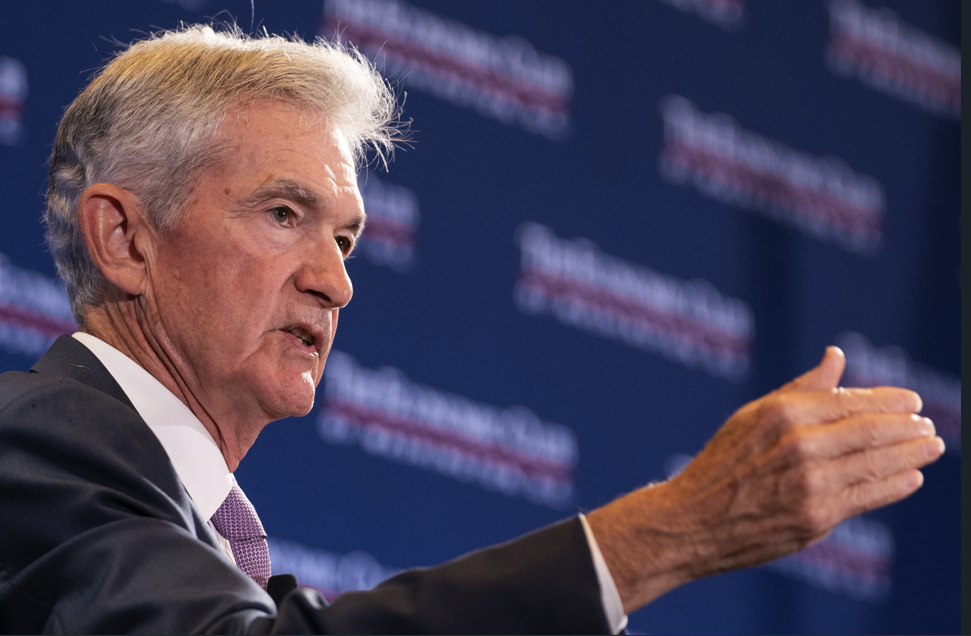
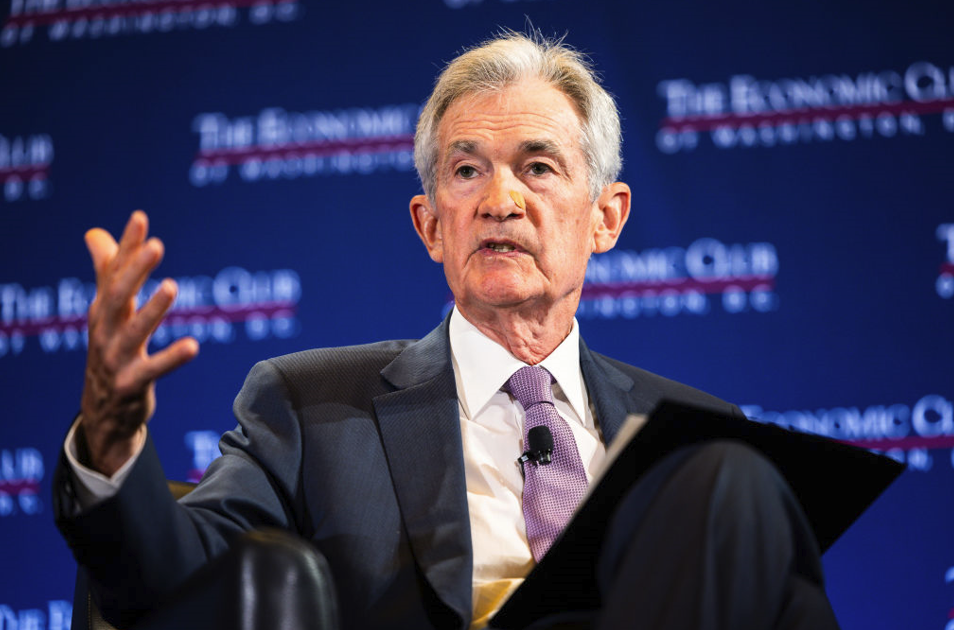
Federal Reserve Chair Jerome Powell recently testified that he’d like to see more good news on inflation before cutting interest rates. He got what he asked for.
When the Federal Reserve signals the likely path of monetary policy to investors this week, including an anticipated start to interest rate cuts in September, it can no longer be complacent about the labor market.
President Joe Biden’s withdrawal and endorsement of Vice President Kamala Harris has sent shockwaves through the political establishment, and while former President Donald Trump remains the frontrunner, the wind has certainly shifted in Harris’s favor.
Yes, the market could continue to rotate massively from large-cap to small and mid-capitalization companies. However, given the current levels of bullish sentiment and allocations against a backdrop of weakening economic data and widening spreads, this suggests the current rotation may be nothing more than a significant short-covering rally.
Progress toward a goal usually isn’t linear. The first 50% isn’t too bad, the next 40% is harder, and the last 10% consumes most of the effort and resources. Business strategists call this the “last mile” problem… and it applies to inflation, too.
Economic indicators are released every week to provide insight into the overall health and performance of an economy.
The Momentum factor picked up where it left off at the end of the first quarter, turning in another standout performance in the April-through-June timeframe and ending the second quarter as the factor most relevant to positive performance.
As we approach the end of the fiscal year, investors should be focusing on the Treasury General Account as one factor of many that may impact global liquidity, and in turn, market performance in the coming two quarters.
With growth moderating and inflation cooling, the US seems on track for a soft landing—as markets digest a stream of incoming information. Equity performance may be on the verge of broadening beyond a handful of stocks, and still-sizable bond yields bolster return potential.
The small cap rally has primarily been a de-risking event. It's unclear at this point whether it’s just a blip or the beginning of a new trend in market leadership.
The equities market could see small-caps outrunning their large-cap peers as more investors are shifting to small-cap stocks.
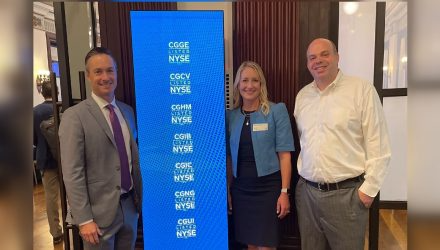
In June, Capital Group added seven new actively managed products. Its executives were in New York last week to ring the NYSE closing bell.
While gold prices rise due to heightened geopolitical uncertainty, the US stock market is breaking records, and global demand for the dollar remains robust. This can be attributed to growing confidence in the US economy, which continues to surprise on the upside.
Increasing the tax efficiency of a retiree’s income portfolio with the NEOS ETF suite may offer several benefits.
Despite all the hoopla surrounding technology stocks in the first half of the year, software names struggled.
It's been another strong first half for the U.S. ETF industry, with overall flows set to challenge or surpass historic records.
The second quarter began with inflation concerns causing a negative return in April, but improved inflation led to a more hopeful market in May and June, with AI and semiconductor stocks leading.
Goldman Sachs Asset Management is launching four new municipal-bond exchange-traded funds, adding to the $129 billion corner of the state and local government debt market.
Money talks, but even $23 billion didn’t convince the founders of Wiz Inc. to sell to Alphabet Inc.
Like it or not, the world is going to fall far short of meeting its current goals for reducing carbon emissions.
San Francisco has been the subject of a lot of negative press over the past several years. It was hit hard by the pandemic exodus from cities, the shift to work from home that emptied offices, the crime and homelessness that marred its national reputation, and pledges by corporate leaders such as Elon Musk to relocate their company headquarters elsewhere.
Pressure is again mounting on the proxy advisory firms that recommend how investors should vote on executive pay and other corporate matters. Regulators need to remember who should be prioritized here — investors, not company management.
The economy and markets have emerged from the pandemic fundamentally changed. For equity investors, we believe this means a different opportunity set than the one that prevailed over the past decade and a half ― and one that favors alpha (excess return) over beta (market return).
I almost exclusively talk about stocks here in Dividend Digest because dividends are at the root of my strategy. But most income investing includes some level of exposure to debt.
The big story making the rounds this summer is the spike in the small-cap Russell 2000 since the release of the latest Consumer Price Index (CPI) report, which shocked the market by printing 0.0% month-over-month in June.
Western demand and monetary policy are having an important impact on economic prospects for the Asia-Pacific region.
US stock markets have remained bullish in the face of deepening domestic and international risks, owing to three key factors. But with two of these coming under pressure, the durability of the current cycle will depend on the third: the US Federal Reserve.
The ongoing global electrification is spurring a demand for copper, but supply shortages could portend higher prices in the future.
Calamos understands time in the market vs. timing the market, but they also understand uncertainty surrounding election.
This symposium brings the brightest minds in the ETF and mutual fund industry together for panel discussions spanning nine critical fixed income topics.
US bonds rallied sharply as signs of a slowing economy and a recent stock-market rout fueled calls for quicker interest-rate cuts from the Federal Reserve, further juicing bets on a steeper yield curve.
The assumptions that have driven this year’s global financial markets are being rapidly rethought.
Ether, the second-largest token, paced a drop in digital assets following a slump in equities that spread unease in global markets.
Investors soured on the promise of artificial intelligence Wednesday, sparking a $1 trillion rout in the Nasdaq 100 Index as questions swirled over just how long it will take for the substantial investments in the technology to pay off.
The US inflation rate, which had surged to over 9% two years ago, is now around 3%. Based on current trends, it should settle at 2.5%-3%, a range that most economists would deem consistent with financial stability, including a firm anchoring of inflationary expectations.
For taxable investors, an appreciating portfolio can be a mixed blessing. But regular loss harvesting isn’t the only way to reduce your portfolio’s tax bill, especially as its value rises. We share some important tax-management techniques for the future.
Following the historic decision by President Biden to drop out of the 2024 race, Raymond James CIO Larry Adam provides insight into his team's economic and market outlook.
With a recent IRS announcement, heirs now have clarity on the 10-year rule for distributions from inherited retirement accounts. Our Bill Cass details the final regulations.
The bitcoin halving event in April 2024 reduced the block reward for miners, which is expected to increase bitcoin’s price.
Qraft Technologies took AI-driven investment products to the next level with the launch of the LG-QRAFT AI-Powered U.S. Large Cap Core ETF (LQAI) in November of 2023. The firm partnered with LG AI Research, an artificial intelligence (AI) research hub of South Korea's LG Group, to create LQAI.
The appetite for nuclear energy is growing fast. Here in the US, most adults now favor expanding our nuclear power capabilities because it’s a great alternative to fossil fuels. Unlike wind or solar, nuclear provides energy around the clock. So, why haven’t we built more nuclear power plants?
The momentum we've seen in U.S. equity markets over the past year continued in the second quarter of 2024. With large technology stocks leading the wave, the S&P 500 index has risen 23% in the 12 months ended June 30.
Host Nate Geraci sat down with VettaFi's Lara Crigger and Bitwise CIO Matt Hougan to discuss small-cap stocks and spot ether ETFs.
When looking to pair yield and credit quality, corporate bonds are an ideal option, especially when it comes to investment-grade.
The RecessionAlert weekly leading economic index (WLEI) is a composite for the U.S economy that draws from over 20 time-series and groups them into the following six broad categories which are then used to construct an equally weighted average.
Join the experts at Pinnacle Dynamic Investments as they unpack a unique active strategy that leverages a systemic, rules-based selection process to pick a concentrated pool of stocks, and then deploys a risk management algorithm to protect the investment in the event of high market risk.
Here’s how to conduct yourself as an advisor if you want to demonstrate that you care about your clients.