The travel and leisure space remains a bright spot, with Marriott posting a robust earnings beat driven by a 12% increase in gross revenue and strong global booking trends. Airbnb also had a strong showing, topping revenue forecasts and raising its full-year outlook as global travel momentum drove a 19% increase in gross booking value.
That skepticism isn’t contrarianism for its own sake, but rather the recognition that when a thesis achieves consensus, the crowd has usually already priced the easy part of the move, and the hard part is what comes next.
With 82% of market cap having reported, the S&P 500 is on track for 27% year-over-year earnings per share (EPS) growth, the strongest since 4Q21. More than 84% have beaten earnings estimates − the most since 1Q21 − while earnings revisions are up 12%, the fastest pace in four years.
Gold demand was up 2 percent year-on-year in the first quarter, setting a record in value terms. Including over-the-counter (OTC) selling, gold demand came in at 1,231 tonnes.
Ironically, the story I want to discuss today involves two companies we do not own and never have owned. Though they are household names, and this transaction is one of the most significant acquisitions in business history.
Artificial intelligence unknowns are creating stress in the market, and we don’t see that ending any time soon. For long-term investors, these stressors can create opportunities.
Putting money directly into Trump accounts is fundamentally different: It goes directly to the beneficiaries. Whether it will be more effective at improving prosperity or reducing populist anger is unclear. The public/nonprofit model can be better targeted and address specific societal needs, such as hunger or education.
In this month’s Allocation Views, the Middle East conflict and its impact on the global economy in 2026 continue to be the chief concern for asset allocation, as inflationary pressures challenge central bank policy.
The U.S. labor market demonstrated remarkable endurance in April, with job gains outpacing expectations and private sector expansion reaching its strongest point in over a year. As the Federal Reserve maintains a steady interest rate policy, the focus now turns to upcoming inflation and retail data to gauge the sustainability of this momentum.
Emerging markets have grown more resilient, according to the Templeton Global Macro team, and the Iran-driven oil shock is a fresh test. Impacts will likely diverge between oil importers and exporters and vary widely within each group.
Though the U.S. drills far more oil than in the past and relies less on supplies from the war-torn Persian Gulf, U.S. consumers see there's no escaping global price realities.
With the war in Iran dragging past the original ceasefire deadline, how might the situation impact global energy markets—and other sectors—from here? To cut through the noise, we asked Luke Pryor, Security of the Future Portfolio Manager and Co-Portfolio Manager of Strategic Equities, to share his oil and gas industry expertise.
What to do? Does one capitulate and chase the bubble at the highest valuations in history? Does one wring their hands at the prospect of a bubble that might only go higher and higher forever without end? My hope is that this month’s comment will offer both perspective and confidence that it is not necessary to chase current extremes, nor to be anxious even about the possibility of steeper ones.
As market volatility lingers, the latest S&P Persistence Scorecard reveals a sobering reality for active managers.
DoubleLine Capital’s Jeffrey Gundlach is repositioning some of his funds for the extreme scenario that the US government could choose to restructure its debt in response to a potential future recession.
US stocks were on track for a record closing high, buoyed by semiconductor stocks, strong monthly payrolls figures and a US-Iran ceasefire that appeared intact even with overnight clashes near the Strait of Hormuz.
US employers added more jobs than expected for a second month and the unemployment rate held steady in April, indicating the labor market is holding up despite rising energy costs sparked by the Iran war.
After years of U.S. equity dominance, conditions were shifting coming into 2026. Earnings growth outside the U.S. had begun to converge, wide valuation gaps narrowed modestly, and investor interest in international equities was rebuilding. While the Iran war injected uncertainty and temporarily dampened enthusiasm for non‑U.S. stocks, the underlying setup remains intact.
The April FOMC meeting’s four dissents and resistance to maintaining an easing bias signal a higher bar for rate cuts under incoming Chair Warsh, suggesting investors may favor Treasury floating-rate strategies to navigate a prolonged “higher-for-longer” environment.
Last week was the busiest week of Q1 earnings season, as close to half of the S&P 500 reported quarterly results including Microsoft, Amazon, Meta, Alphabet, and Apple. Alphabet stock jumped 10 percent on the back of strong results from Google Cloud and Gemini.
Opening a 529 plan is a tax-advantaged way to set aside money for college. The money you contribute can grow tax-deferred and qualified withdrawals are tax-free.
Dividends have historically been the dominant method by which companies returned capital to shareholders. Share repurchases have only recently surpassed cash dividends as the primary form of corporate payout in the United States. Investor interest in buyback strategies has grown rapidly as a result.
In this video, Chuck Carnevale explains why valuation is critical when investing in growth stocks and why investors must balance growth potential with the price they pay.
Claiming Social Security is one of the most critical financial decisions you will make, serving as a significant factor in determining your financial success in retirement. You must consider several variables: Does it make sense to claim benefits early to improve current cash flow and avoid tapping into other accounts?
Warren Buffett shared his usual wisdoms about patience, diligence, prudence and kindness in a CNBC interview the morning of Berkshire Hathaway Inc.’s annual meeting last Saturday, the first in many decades that the oracle did not lead. But the sign that hung above him spoke loudest.
Something unusual is happening with U.S. inflation data. While the core Consumer Price Index (CPI) has looked relatively cool recently, core Personal Consumption Expenditures (PCE) inflation has risen sharply.
The movement of silver out of the U.S. has helped ease market tightness, but an ongoing structural supply deficit makes the metal vulnerable to future squeezes.
The Artemis II mission was a glorious moment for space exploration and a sign of a potential $1 trillion investment boom in the global space industry over the next decade.
Advisor clients have myriad goals and needs for their portfolios — but this year, delivering on them has gotten more complicated. Events in the Middle East will likely spur inflation for the rest of 2026.
Research Affiliates explains how a fundamental growth strategy can outperform traditional market-cap-weighted growth indices.
TCW's concentrated strategy targets power grid constraints over clean tech, riding demand from AI and manufacturing reshoring.
Retirement is a challenge for countless investors and their advisors. A new report from Goldman Sachs has more.
With today’s unusual market environment, active management is on the rise. Join the experts at Baron Capital for a product due diligence session exploring their active strategies that seek long-term growth for investors.
Exchange-traded funds can be the source of liquidity that retail investors need after ramping up exposure to private assets, BlackRock Inc. executives wrote in a report.
An historic surge in US stocks has pushed equities to fresh highs, yet signs of overheating sentiment suggest that the rally may be entering a slower phase.
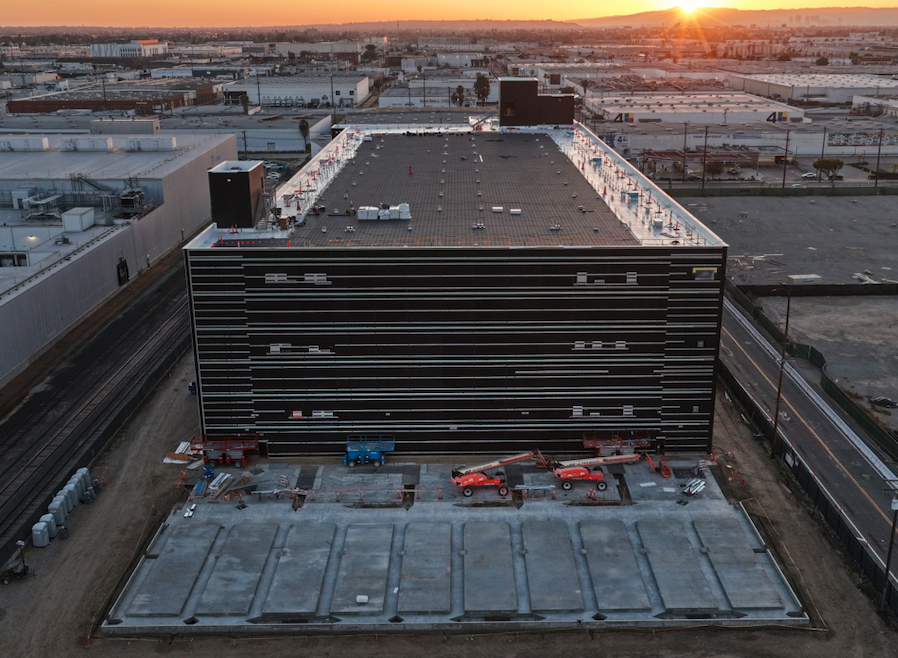
For a bunch of unremarkable warehouses, they’re generating a lot of controversy. Data centers — low-slung facilities that house the server racks and energy systems that underpin the digital economy — have become a heated issue on the campaign trail. Politicians from both parties are pushing bills to restrict them. Some want a nationwide “moratorium.” That would be a historic mistake.
Wall Street banks are getting ready to raise billions of dollars taking data center companies public, even after IPO investors have already piled into anything that looks like a bet on artificial intelligence spending.
As equity markets transition into 2026, large cap equity portfolio managers share a surprisingly consistent framework — paired with sharp disagreements on where risk and opportunity sit. A survey of large growth, value, and blend managers reveals a market shifting away from simple narratives toward selectivity, fundamentals, and manager skill.
The thinking behind space solar makes some sense: The sun doesn’t always shine on Earth, which means solar panels on the ground aren’t always gathering energy. There are no clouds to block the sun in space, so aside from a couple of times per year around the equinoxes, panels in GEO are constantly bombarded with solar rays.
S&P 500 first quarter 2026 earnings are tracking at nearly 28% year-over-year, with rising profit margins suggesting the strong run could persist.
Global equity markets entered 2025 with a familiar narrative. U.S. leadership remained firm, supported by strong earnings, AI-driven optimism, and a market structure increasingly dominated by a narrow group of large-cap companies. For many investors, the path forward seemed clear: stay anchored to what worked.
While the Middle East war takes on the lion’s share of headlines, and rightfully so, there has been another development in bond-land that has gone relatively unnoticed. Indeed, one concern that crops up in the U.S. Treasury (UST) market is the potential for higher budget deficits from the already lofty current reading.
By remaining on the US Federal Reserve board of governors after the end of his term as chair, Jerome Powell can keep the focus on his widely celebrated role as the “defender of the Fed.” But if that allows him to sideline substantive criticism of Fed policy during his tenure, the institution may suffer for it.
The generational divide is a part of the human condition – and the investor condition. It’s not just that one group has more experience than the other, or that one is more eager to make its own way, but that both groups can learn totally different lessons from the same event.
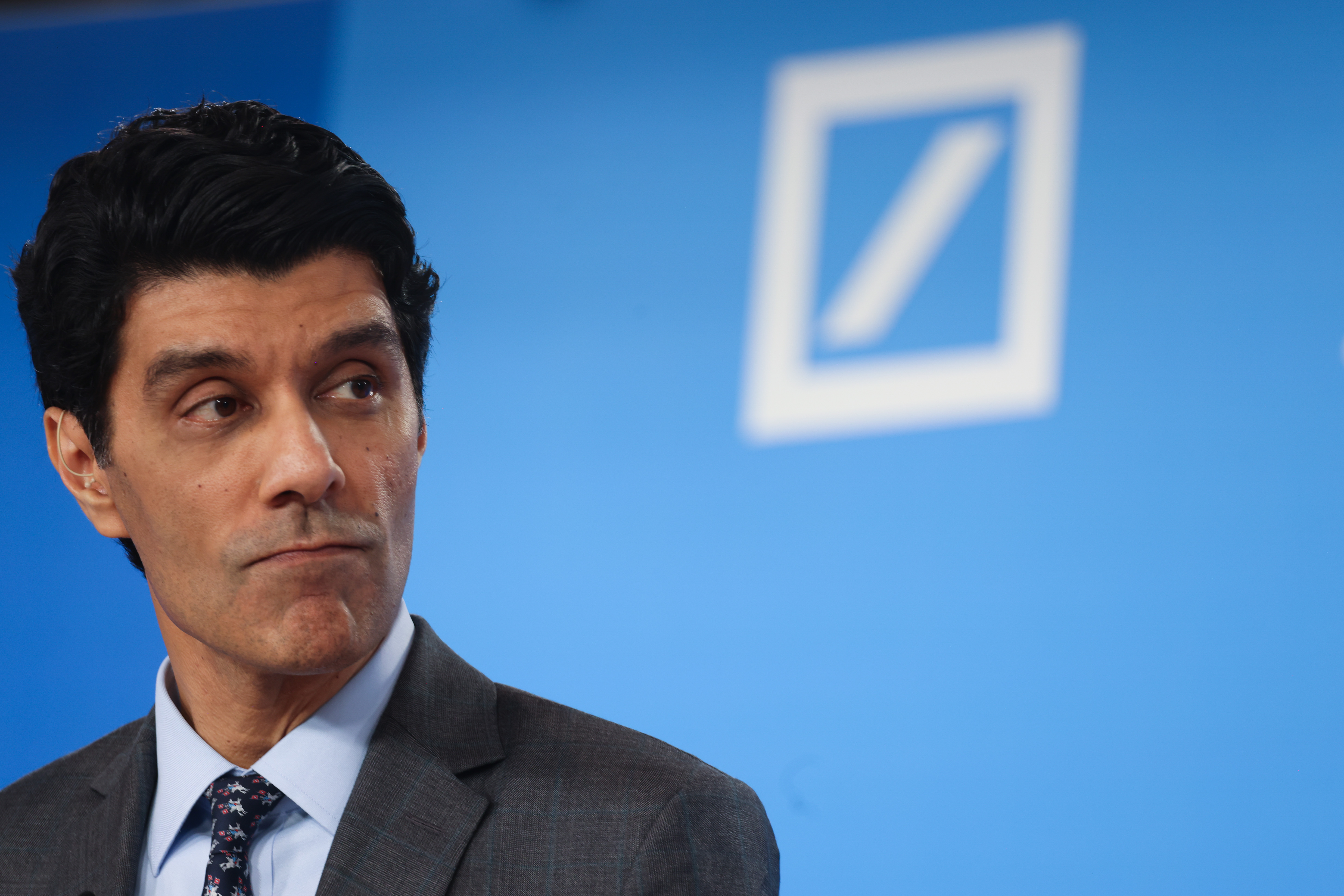
Sometimes small changes speak loudly. Deutsche Bank AG’s new chief financial officer, Raja Akram, put the German lender’s consumer and asset management businesses before its corporate and investment banking units in his first earnings presentation last week.
ClearBridge Investments suggests investors could use volatility as an opportunity to deploy capital, while modestly favoring the stronger earnings revisions and more reasonable valuations available in non-US equities.
It’s Shareholder Meeting Month on Wall Street. With the bulk of the Q1 earnings season now in the rearview mirror, investors turn their attention to Annual General Meetings (AGMs) held by some of the most important multinational corporations.
In a recent Market Outlook Symposium we hosted at VettaFi, we learned that 2026 has marked the return of fixed income as a strong contributor to an investor’s total return. We also learned that the biggest theme in fixed income investing this year is dispersion. Where you are putting your money to work matters.
With shares of Amazon (AMZN) up 28% over the past month, it’s safe to say investors are at peace with the company’s massive artificial intelligence (AI) spending plans.
Join the experts at State Street Investment Management, Market Guard, and Globalt Investments for an educational webcast examining gold’s role in today’s market environment, including portfolio considerations, historical context, and allocation frameworks.