As recently as the beginning of this year the market pundits were predicting up to six Federal Reserve rate cuts to the short-term Federal Funds Rate. Shockingly, the pundits’ expectations have not come to fruition. Predictions based on the sentiment of the day fill the twenty-four-hour news cycle on multiple outlets.
On this episode of the “ETF of the Week” podcast, VettaFi’s Head of Research Todd Rosenbluth discussed the Capital Group Municipal Income ETF (CGMU) with Chuck Jaffe of “Money Life.” The pair talked about several topics regarding the fund to give investors a deeper understanding of the ETF overall.
Join the experts at Eaton Vance for a webcast discussing best ideas for fixed income positioning going forward.
Strategas’ Todd Sohn highlights the industry’s chase for record inflows and discusses everything from recent ETF filings to market concentration risk. VettaFi’s Kirsten Chang talks new ETF launches, small caps, REITs, and much more.
Here’s the truth: your prospect doesn’t need a friend and isn’t looking for one. They need someone to be honest and to tell them the truth, as painful as it might be, about the seriousness of their situation.
The “country” in this article is the wild and woolly market of small retirement savings plans (SRSPs) that have less than 100 participants. The “old men” are baby boomers who cannot afford to lose their lifetime savings. And the villain is the next stock market crash.
Given the inevitable ups and downs of the financial world, the joy of missing out on the frenzy might be a strong component of long-term financial and emotional wellbeing.
US job growth in the year through March was likely far less robust than initially estimated, which risks fueling concerns that the Federal Reserve is falling further behind the curve to lower interest rates.
Citigroup Inc. says the carry trade is back, but with a key difference: hedge funds are borrowing US dollars rather than the yen for their wagers on emerging markets.
More than any of the megacap technology stocks, Amazon.com Inc.’s big spending ways are coming at the expense of profits, and its shares are being punished as a result.
Oil, copper, soybeans and a handful of others monopolized the attention — but of all commodities, the humble lump of iron ore benefited the most from the Chinese economic boom of the last 25 years.
The term “recession” made a big comeback in news stories and social media posts this month. Goldman Sachs Group Inc.’s Chief Economist Jan Hatzius was among those who formally bumped up his odds of a downturn to considerable media hoopla.
This week marks the ‘unofficial’ end to 2Q24 earnings season – and aside from a few wobbles, it has been reasonably good. S&P 500 earnings growth came in at a solid 11.2% YoY pace – its best quarterly performance since 4Q21.
Are the “Mega-Cap” stocks dead? Maybe. But there are four reasons why they could be staged for a comeback. The recent market correction from the July peak certainly got investors’ attention and rattled the more extreme complacency.
Last week, we explored the old economic rules that falsely predicted an imminent recession. Losing those guideposts has complicated our efforts to craft an outlook.
I have received a lot of blowback from my recommendation that the Federal Reserve (Fed) drop the Fed Runds Rate by 150 basis points (bps) over the next several weeks. Certainly, the data has come in stronger than I (and many others) have anticipated. Particularly surprising was the drop in jobless claims, now nearer to the midpoint of my 200k to 240k range after breaching the upper limit.
Looking back at the 14 Fed rate cycles since 1929, certain patterns emerge. Still, investors instead need to examine what factors are driving the Fed now.
Silver is an important component of solar photovoltaic (PV) panels, meaning that for China to reach its ambitious climate targets, it must import massive amounts of the white metal. In June alone, China spent over $228 million on silver, a new monthly record based on Bloomberg data going back to 2009.
A recent article co-authored by Stephen Miran and Dr. Nouriel Roubini, aka Dr. Doom, accuses the U.S. Treasury Department of using its debt-issuance powers to manipulate financial conditions.
While high rates can make borrowing costlier and slow down housing markets, they also open favorable opportunities in financial products like annuities. In other words, annuities are back and stronger than ever before!
Ethical Capital's Sloane Ortel marshals the data to counter the arguments against aggressively fighting climate change laid out in Larry Siegel's recent article.
Head fake is a trading term, too. Some bit of information convinces investors a market is going to move a certain way. They reposition their portfolios accordingly… just in time to find out the information was wrong. Oof.
Investors including JPMorgan Asset Management, M&G Investments and Aviva Investors say they seized on the retreat in riskier assets at the start of the month to bolster their holdings of emerging-market bonds.
The recent rebound in US tech stocks isn’t convincing options traders just yet.
This year’s presentation by Chair Jerome Powell is eagerly awaited due to the economic fluidity and financial volatility that the US has been experiencing, and its spillovers to the rest of the world.
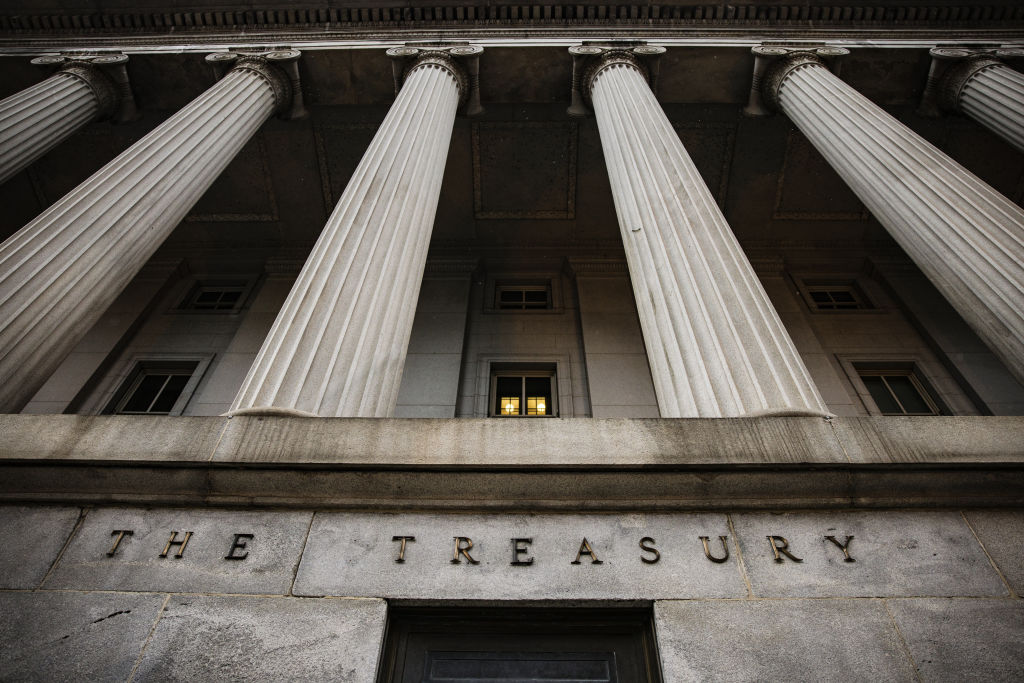
Decisions made by the Treasury get much less attention than those made by the Federal Reserve, but they can be even more consequential for interest rates — and the entire US economy.
Just as bond traders grow more assured that inflation is finally under control, a camp of investors is quietly building up protection against the risk of a future spike in prices.
U.S. consumer-price gains eased to 2.9% in July—the lowest increase since 2021
Unfortunately, when it comes to the government, what’s old is sometimes new again.
Powell will hint at normalizing monetary policy, but at a measured pace.
The current economic landscape is fraught with uncertainty, and the potential for higher inflation continues to pose a real threat to market stability.
June’s rate of inflation showed, for the first time in several years, an important slowdown in shelter costs, something that economists, us included, have been expecting for a very long time but had not materialized.
Markets were recently rattled by concerns the U.S. may slip into recession, but it's not clear that those fears are justified.
Most DC plan participants pursue retirement readiness unassisted, but few grasp what’s required, according to our latest survey.
Texas Instruments Inc. is set to receive $1.6 billion in Chips Act grants and $3 billion in loans, the Biden administration announced Friday, marking the latest major award from a program designed to boost American semiconductor manufacturing.
Emerging-market stocks rallied on Friday, driven by tech companies in Asia, following US data which boosted investor optimism that the world’s biggest economy will avoid a recession.
Earlier this year, around the time Nvidia Corp.’s market cap eclipsed that of the entire S&P 500 energy sector, I wrote about whether oil and gas stocks might offer a decent hedge when AI-fever breaks. The past several weeks have offered a test.
Portfolio Manager Jeremy Sutch, CFA, and Chief Investment Officer Sean Taylor assess the issues besetting the region’s key markets—from domestic challenges to geopolitical headwinds—as well as their structural strengths, and whether prospects may brighten with the onset of a U.S. rate-cutting cycle.
New-home construction in the US fell in July to the lowest level since the aftermath of the pandemic as builders respond to weak demand that’s keeping inventory levels high.
At the end of next year, most of the provisions of the Tax Cuts and Jobs Act of 2017 are set to expire. If nothing is done, taxes will go up. Both presidential contenders say they won’t let this happen and have promised to extend many or most of the law’s changes.
BlackRock Inc. says the market for blended finance has now reached a “turning point,” as it targets growth in deals that combine private and public funding.
Value has been in a protracted slump versus growth for years, but it’s been undergoing something of a makeover during that time.
In a part of the US market for exchange-traded funds that has become known for increasingly risky products, a new offering has debuted that stands out in the crowd.
A popular yen-centered carry trade that blew up spectacularly two weeks ago is staging a comeback.
Quant traders at Man Group Plc are betting that unlocking the secrets of private markets will give them an edge in trading public stocks.
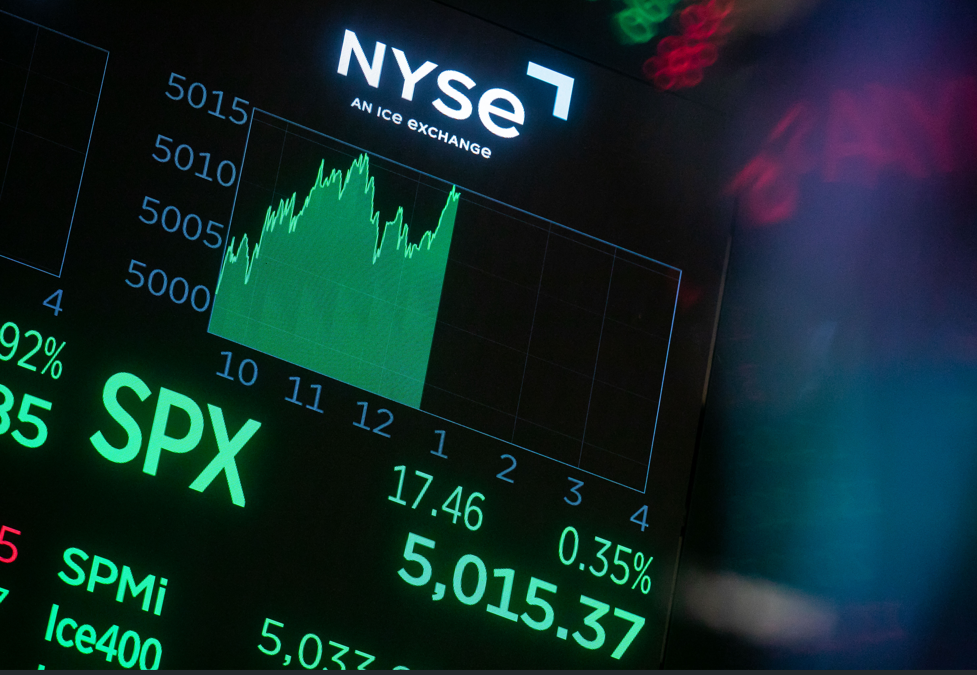
With US equities on the rebound, this summer’s selloff is looking more like a pause in the bull market than the beginning of its end.
When US Federal Reserve Chair Jerome Powell speaks at next week’s annual economic conference in Jackson Hole, Wyoming, people will be listening intently for any hint about what the central bank will do with interest rates at its September policy making meeting.
If rising layoffs and weakening consumption are going to snowball into a US recession at some point, my interpretation is that the mass of macroeconomic ice crystals is still only about the size of a marble.
Because there is unprecedented use of the word “unprecedented,” we thought it appropriate to expand our annual Charts for the Beach from 5 charts to 10 charts and tables this year. So, probably best to stay under the beach umbrella as you read our unprecedented extended edition.
GMO has posted a new 7-Year Asset Class Forecast.