To see real results, your content must be relevant to the people you want to reach, consistent enough to build familiarity, and valuable enough to earn trust. Done right, it becomes the foundation of your marketing strategy and a long-term driver of growth.
European stocks were set to wrap up September with the best performance since 2019, as optimism around resilient US economic growth and lower interest rates lifted risk appetite.
Sometime in the coming months, the impact of US tariffs will begin to be felt in India — and it will not be pretty.
JPMorgan Chase & Co. is the latest issuer attempting to fit private credit assets into a retail-friendly exchange-traded fund vehicle.
The Fed's extraordinary stimulus since the pandemic has fueled one of the broadest waves of speculation in history, from expensive equity valuations, historically tight credit spreads, and the ongoing bubble in cryptocurrencies, all pointing to excess liquidity.
JFLX charges a 45 basis point net fee for its investors. The strategy, per its prospectus, is empowered to invest across the debt spectrum. Its managers can shift its active strategy toward markets or sectors as market conditions change.
Back in the day, the arrival of the postman was a big deal. E-mail and texting existed only in the dreams of technologists, so people communicated with one another by writing letters.
Even as rate cuts occupy center stage in the 24-hour financial news cycle, surprise inflation could strike anytime. In the current macro environment, inflation could stem from the constant wildcard of tariff policy.
Get ready each week with high-conviction insights that go beyond media headlines.
From managing exposure to leveraging growth opportunities—core active portfolio managers can unlock the full potential of emerging markets.
Economic data are all over the place. GDP keeps growing in spite of signs of weakness in the labor market. Tariff policy is volatile, immigration has slowed, monetary policy tightened in 2023-24, with the M2 measure of money declining and “real” short-term interest rates consistently higher than at any time since 2010.
On this week’s edition of Market Week in Review, Senior Investment Strategist and Head of Canadian Strategy, BeiChen Lin, assessed the health of the U.S. economy. He also explained why the Swiss National Bank held the line on monetary policy and discussed the potential market impacts of a U.S. government shutdown.
Goodbye summer, hello fall! As the sun sets on another season, we’re swapping beach days and backyard barbeques for crisp mornings, vibrant foliage, football weekends, and everything pumpkin spice.
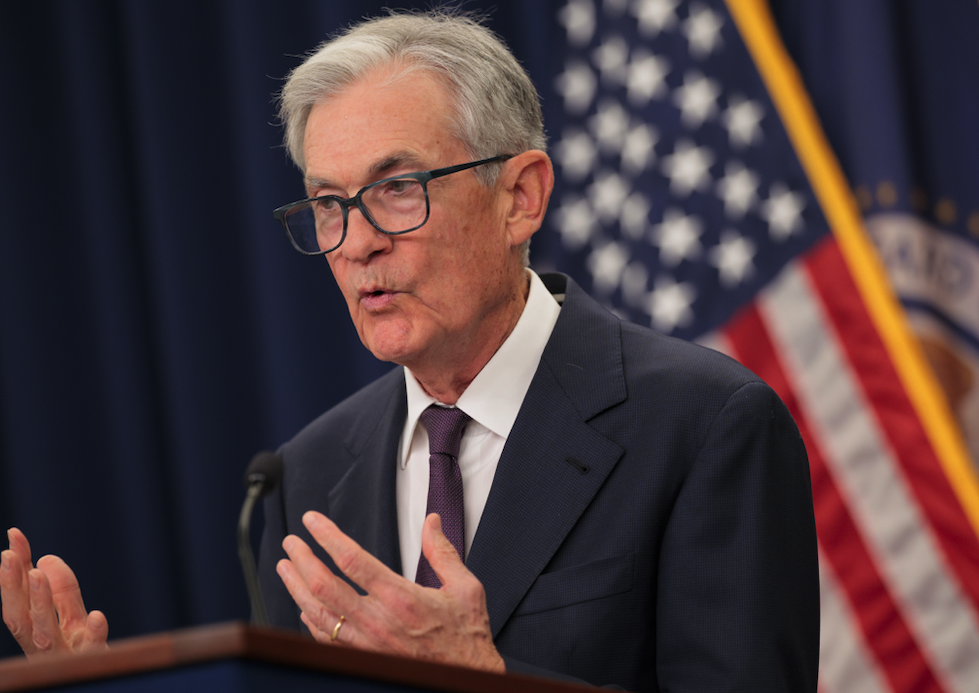
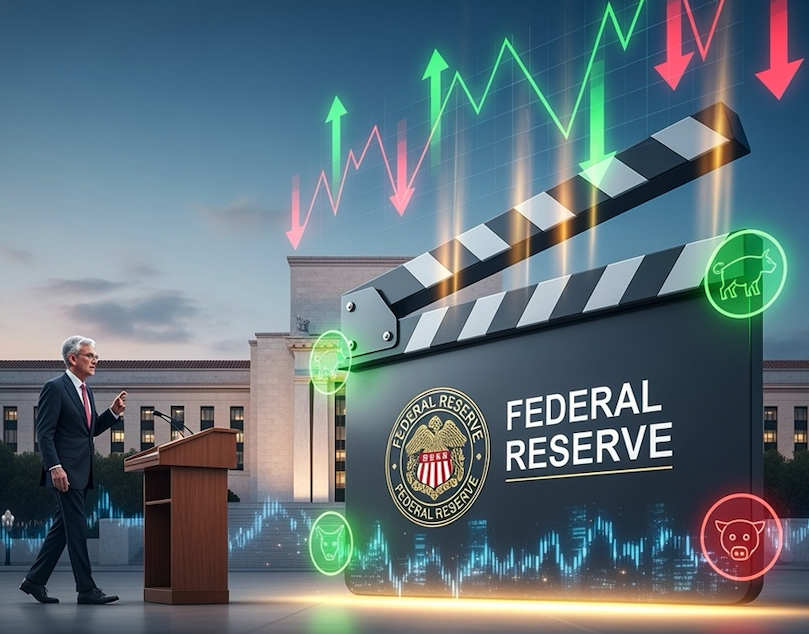
As expected, the Federal Reserve cut its policy rate on Sept. 17 by a quarter of a percentage point. Officials had signaled the move in advance and Chair Jerome Powell explained the reasoning well enough.
My reasons are simple. The debt pile is unfathomably massive, and it’s accelerating. Fiscal imbalances are widening, and monetary policy is being constrained. The Fed can’t raise rates aggressively without bankrupting the government, but it also can’t make deep cuts without tanking the dollar.
For an industry that’s only just getting started, there’s a lot of hype around humanoid robots.
Federal Reserve Chairman Jerome Powell and his fellow central bankers are stuck between a rock and a hard place – and he knows it.
VettaFi’s Head of Research Todd Rosenbluth discussed the Fidelity Investment Grade Securitized ETF (FSEC) on this week’s “ETF of the Week” podcast with Chuck Jaffe of “Money Life.”
When the next crash comes, inevitably there will be an uproar. Baby boomers must not wait for that uproar. They need to get out of their TDFs now and move to the safety of T-bills and TIPS, following the guidance of academic theory. That’s just the smart thing to do.
Financial planners perform a valuable service by discussing with married clients what will happen if the income of one of them disappears upon death. But the focus should be on the adequacy of the remaining income to the spending needs of the survivor — not the change in tax rate from married to single.
Some Wall Street pundits believe that the recent Fed rate cut makes its policy too accommodative, and they also argue that the Fed is creating a “Goldilocks” scenario for the stock market. To better gauge where policy lies on the accommodative to restrictive spectrum, it's critical to compare the policy to current economic growth and inflation rates.
It’s not all bad news for the the UK stock market. AstraZeneca Plc has found a clever way of becoming a US-listed company without going all-American.
Many advisors avoid allocating to inflation-protecting equities, fearing the age-old rule that protection comes at a price. However, my recent research with my colleagues Giovanni Bruno and Ben Luyten at Scientific Beta suggests this industry-wide fear is unfounded: Inflation-hedging stocks perform just as well as their inflation-sensitive peers.
I take Jerome Powell at his word when he says that he and his colleagues at the Federal Reserve are determined to get inflation back to its 2% target.
Too little attention was paid at the start of the decade to the likely hangover from a heady cocktail of cutting interest rates close to zero and increased bond buying via quantitative easing — at the same time as governments delivered a bucketload of fiscal stimulus.
Wall Street’s most powerful collection of stocks, the Magnificent Seven, is looking a tad dated. Make way for the Great Eight. Or maybe the Golden Dozen. Or the TenAI of GenAI.
US stocks rose on Monday, as investors shrugged off the risks of a US government shutdown and turned their attention to economic data that may offer more insight about the pace of future interest-rate cuts.
There’s small change and big change. The small ones are notable: recessions, market crashes, etc. You’ll see several in your lifetime. The greater changes tend to be technology-driven: the Industrial Revolution, the internet, and now maybe artificial intelligence, robotics, and what I’ve called the Age of Transformation.
While the market is betting on an economic revival to support current valuation levels, the real economy is suggesting things are slowing down. Notably, the evidence isn’t coming from obscure corners. It’s showing up in the indicators designed to give us a heads-up before a storm arrives.
BLS and ADP jobs reports often diverge, creating mixed signals. Traders need to know why this happens, and how to use these reports to spot risks, opportunities, and mispricing.
Last week’s economic data presented a sharp contradiction between a resilient U.S. economy and increasingly concerned American households.
Investors are increasingly confident that the U.S. Federal Reserve will cut interest rates several times through mid-2026, signaling a more aggressive easing cycle.
The Federal Reserve (Fed) delivered a highly anticipated 0.25% interest rate cut during its September 16-17 Federal Open Market Committee (FOMC) meeting.
In this video, Chuck Carnevale, co-founder of FAST Graphs, takes a deep dive into what he calls the single most important factor for long-term investing success: the ability to forecast future earnings growth. While past performance matters, it’s really what lies ahead that determines whether a stock will generate wealth or disappointment.
Precious and industrial metals have experienced volatility in recent weeks: gold has surged past $3,700 to reach a new all-time high, silver has climbed to $44 per ounce (its highest level since 2011), and platinum is trading at multiyear highs.
The healthcare sector has certainly been fraught with a myriad of challenges this year, but weakness in the sector could have investors looking for value-oriented plays. That, in turn, could positively affect value-focused funds like the VictoryShares Free Cash Flow ETF (VFLO).
Artificial intelligence is becoming more ingrained in our daily lives-but not everywhere.
This article breaks down five key altcoins — Ethereum, Solana, Ripple (XRP), Litecoin, and one emerging name — that financial advisors should have on their radar.
Private credit isn’t necessarily new to retail investors. In fact, closed-end funds (CEFs) and business development companies (BDCs) have been giving everyday investors access to private loans and middle-market financing for years (see my previous note here). What is changing now is the scale and accessibility.
The rapid growth of artificial intelligence (AI) is fueling a massive buildout of power-intensive data centers, creating a significant new source of domestic energy demand.
For years, midstream companies have generated significant free cash flow (FCF), which has differentiated them from the broader market. With balance sheets in good shape, excess cash has been used to reward shareholders with dividend growth and opportunistic equity repurchases
Bond issuance linked to environmental, social and governance (ESG) purposes dipped in the first half of 2025 following a strong second half in 2024. But we expect issuance of ESG-labeled bonds will pick up for several reasons.
Dividend-increase announcements are on the rise. According to the Wall Street Horizon research team, 71.9% of all dividend changes have been positive so far in 2025.
Cybersecurity continues to grab consistent media attention as hackers become increasingly emboldened. They’re also more ambitious in terms of targets, many of which are familiar companies behind goods and services consumed by Americans on a daily basis.
Listen as VettaFi and Victory Capital discuss how many advisors are using free cash flow focused ETFs to construct portfolios. They cover US large- cap and small-cap ETFs as well as international funds.
Join New Age Alpha and VettaFi for a free educational webcast introducing a smarter way to manage portfolio risk, one that avoids forecasts, speculation, and hype.
Tech builders love a good feedback loop, and Nvidia Corp. and OpenAI have created a $100 billion one this week.
Online services have long had to contend with bot traffic, and your banking app is no exception. While most of us log on to our apps an average of two times every three days (at least according to Bank of America Corp. data), electronic intermediaries that pull data on behalf of third-party services are a lot more aggressive.
As Donald Trump unleashed his trade war, mused about annexing Canada and generally roiled global sentiment toward the US last spring, worries mounted that foreign buyers would boycott American financial products.
President Donald Trump announced a fresh round of tariffs on pharmaceuticals, heavy trucks and furniture, including a 100% duty on patented drugs unless the producer is building a manufacturing plant in the US.